

The Real Question Isn't Just Square Footage
Apartment dwellers are often told they can't - or shouldn't - have pets. That framing misses the point. The more useful question is which animals genuinely fit compact environments rather than merely tolerating them. Space is one variable, but an animal's activity requirements, social needs, and sensory thresholds are equally important. A 600-square-foot apartment can be an ideal habitat for some species and a poor one for others, regardless of how attentive the owner is.
Research in animal behavior consistently shows that environmental enrichment, not raw floor space, drives wellbeing in many companion animals. A bored dog in a mansion fares worse than a mentally stimulated rabbit in a studio. For apartment residents, this reframing is both accurate and liberating - provided the right species is chosen from the start.
For a broader look at how your home setup shapes your options, see what your living situation says about the right pet. Below, we cover the animals that genuinely thrive - not just survive - in smaller homes.
Domestic Cats (especially low-energy breeds)
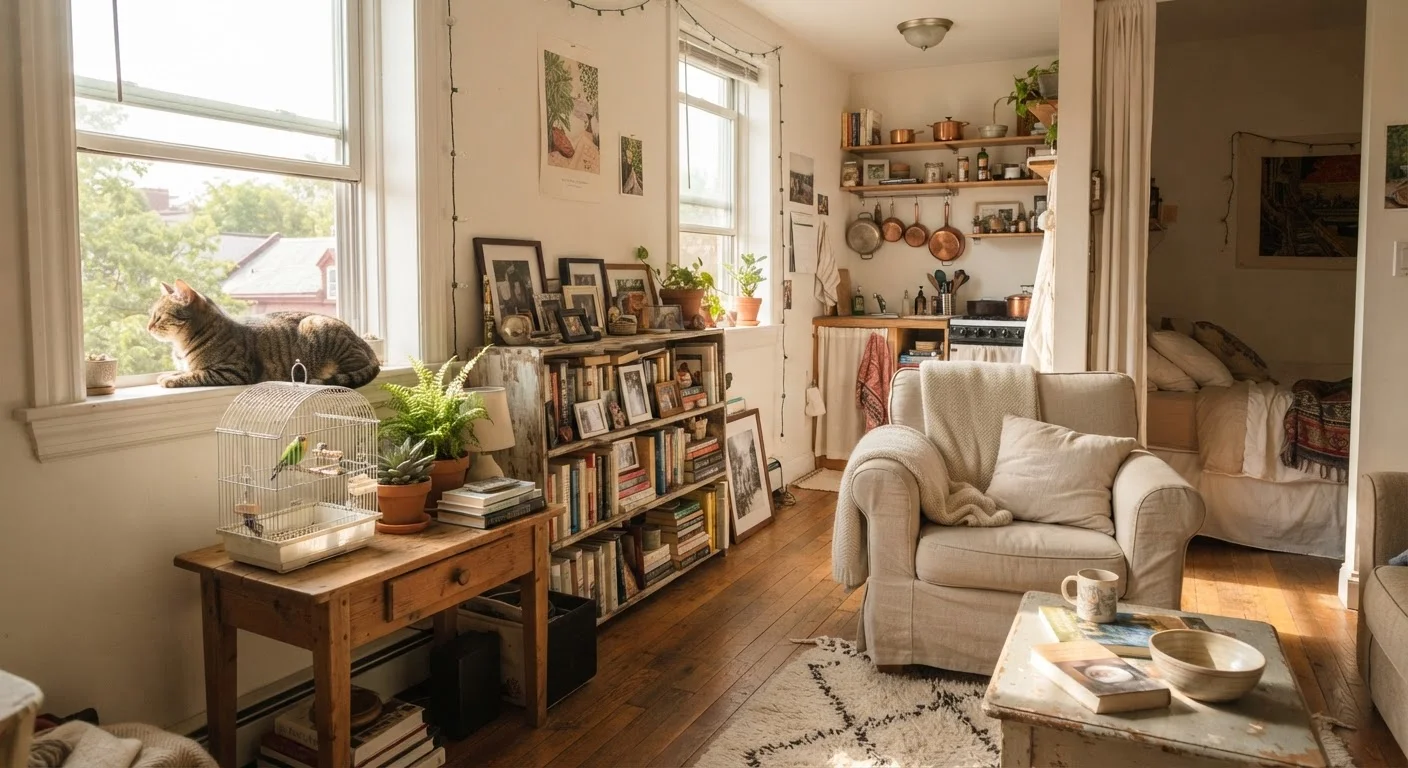
Cats are among the most naturally apartment-compatible pets in existence. Unlike dogs, they don't require outdoor exercise as a baseline for physical health and are instinctively territorial in ways that make a defined, consistent space feel secure rather than confining. Breeds like the British Shorthair, Persian, and Ragdoll tend toward lower activity levels and are generally content in smaller homes.
Vertical space matters significantly to cats - wall-mounted shelves, cat trees, and window perches allow them to express natural climbing and observation behaviors without requiring additional floor area. Mental stimulation through puzzle feeders and interactive play sessions is equally important for maintaining a healthy indoor cat.
Vertical space and enrichment matter far more to cats than total floor area.
Fish (freshwater and marine aquariums)
Fish are perhaps the most genuinely space-neutral pet available. An aquarium of appropriate size for the species - ranging from a 5-gallon tank for a single betta fish to a 30-gallon setup for a community of freshwater species - can fit comfortably in most apartments. Fish don't produce noise, don't trigger most pet-related lease restrictions, and have no exercise requirements that involve the owner's home layout.
The psychological benefits of aquariums are well-documented in the literature; studies have associated viewing fish with reduced heart rate and stress levels. The primary care demands are water quality management and consistent feeding schedules - both manageable for most adults with structured routines.
Fish produce no noise, require no floor space, and offer documented stress-reduction benefits.
Small Birds (budgerigars, cockatiels, canaries)
Budgerigars (budgies) and cockatiels are well-suited to apartment life when their owners understand their needs. These birds require a cage large enough for wing extension and movement, daily out-of-cage time in a safe room, and consistent social interaction - particularly budgies and cockatiels, which are highly social species.
Canaries, by contrast, are more independent and content to remain in a well-furnished cage. They're notable for their singing, which some owners find pleasant but which could be a consideration in thin-walled buildings. Noise level, not space, is the primary variable to evaluate with birds in apartment settings. A practical overview of small apartment-friendly pets covers these species alongside others worth considering.
For small birds, noise tolerance in your building matters more than available floor space.
Reptiles (leopard geckos, ball pythons, bearded dragons)
Reptiles are contained-habitat animals by nature - their entire world exists within an appropriately sized enclosure. A leopard gecko thrives in a 20-gallon tank; a ball python in a similarly compact setup. These animals don't need daily interaction in the way mammals do, though regular gentle handling supports their habituation to humans.
Temperature regulation, UVB lighting (for species that require it), and proper diet are the central care considerations, not space. Reptiles are odor-neutral when properly maintained, silent, and generally hypoallergenic - all meaningful advantages in a shared-wall living environment. They're an underappreciated option for apartment residents who want a genuinely engaging pet without the footprint.
Reptiles live entirely within their enclosure, making floor space almost irrelevant to their wellbeing.
Guinea Pigs
Guinea pigs are sociable, gentle, and well-suited to indoor life. Unlike hamsters (which are primarily nocturnal and may disturb sleep with nighttime activity), guinea pigs are active during daylight hours, making them more compatible with most households' rhythms. They should ideally be kept in pairs or small groups, as they are highly social animals that can develop stress-related health issues when isolated.
A spacious cage - generally a minimum of 7.5 square feet for two guinea pigs, per veterinary guidance - is more important than the apartment's overall size. Daily handling and a hay-based diet rounded out with fresh vegetables meet their primary care needs. They produce moderate vocalizations called "wheeks" and purring sounds, which rarely constitute a noise problem in typical apartment buildings.
Guinea pigs thrive in pairs; their cage size matters far more than your apartment's total square footage.
Low-Energy Dog Breeds (with caveats)
Dogs are the most nuanced entry on this list. Many breeds do struggle in small spaces - particularly high-energy working dogs like Border Collies, Siberian Huskies, and Dalmatians. However, several breeds are temperamentally suited to apartment life when given adequate daily walks and mental stimulation. Bulldogs, Basset Hounds, Shih Tzus, and Cavalier King Charles Spaniels are commonly cited examples.
The key variable is exercise: no apartment dog should go without at least two structured walks per day, and some will need more. Noise is also a practical factor - breeds prone to barking may create conflict in multi-unit buildings. Landlord restrictions and breed-specific policies add another layer of consideration. For anyone weighing dog ownership against smaller pets, comparing small pets with dogs and cats provides a realistic side-by-side look at what each demands.
Temperament and daily exercise commitment matter far more than breed size in apartment dogs.
Making the Right Match for You and Your Space
Choosing a pet for a small apartment isn't about settling - it's about alignment. The animals listed above don't merely cope with limited square footage; many actually benefit from the controlled, predictable environment a compact home provides. Fewer external stressors, stable temperatures, and proximity to their owner can all work in their favor.
Enrich the Environment, Not Just the Space
Regardless of species, mental enrichment consistently matters more than square footage for companion animal wellbeing. Puzzle feeders, rotating toys, perches, tunnels, and owner interaction all support behavioral health in compact settings. Before adopting, research species-specific enrichment strategies - a stimulated pet in a small home will generally fare better than a bored pet in a large one.
Before committing, factor in your building's pet policy, noise ordinances, and any allergy considerations among household members. If you're weighing a small companion animal against a dog or cat, this comparison of small pets versus dogs and cats offers a grounded breakdown of time, cost, and companionship trade-offs. And if energy level is a deciding factor for you, matching a pet to your energy level can help narrow your options further.
This article provides general educational information about pet selection and is not a substitute for guidance from a veterinarian or certified animal behaviorist. Individual animals vary, and consulting a professional before adopting is always advisable.
The content on this site is provided for informational purposes only and should not be considered a substitute for professional advice. While we strive to provide accurate and up-to-date information, we make no guarantees regarding its completeness or accuracy. Always consult a qualified professional for advice specific to your circumstances before making any decisions.