

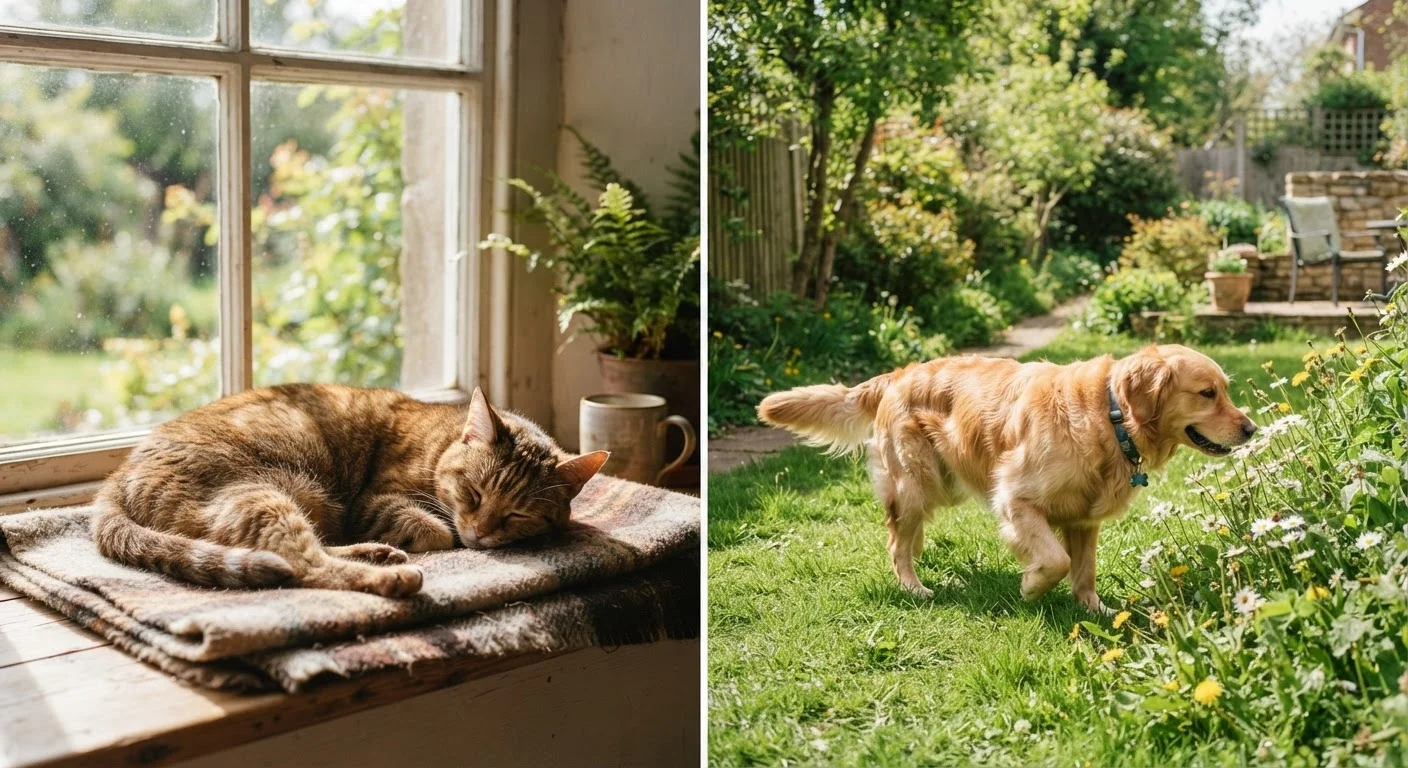
Option A
Indoor Pets
The controlled, contained environment approach.
Best for: Owners in apartments, urban settings, or areas with high traffic and predator exposure who want to manage health risks closely.
Option B
Outdoor Pets
The free-roaming, environment-enriched approach.
Best for: Owners with secure outdoor space, rural or suburban settings, and animals with strong instinctual needs for roaming and stimulation.
What Indoor Life Actually Demands
Keeping a pet strictly indoors eliminates several categories of risk — road traffic, predators, and many infectious diseases transmitted by contact with wild animals. But it introduces a different set of obligations that owners sometimes underestimate.
The core challenge is environmental enrichment. Animals kept indoors rely entirely on their owner to provide stimulation that replaces what they would encounter outdoors: varied textures, problem-solving opportunities, social interaction, and physical exercise. Cats, for example, need vertical climbing space, hunting-style play, and opportunities to scratch — not as luxuries, but as behavioral necessities. Dogs kept indoors need structured walks and play regardless of home size. Small mammals and birds have comparable needs proportional to their species.
Indoor pets also tend to have more predictable veterinary profiles. Parasite exposure is lower, and injuries from fights or accidents are far less common. That said, indoor animals are not exempt from illness — respiratory viruses, obesity from under-exercise, and dental disease are common in sedentary indoor environments. Owners who assume indoor living equals low maintenance often find themselves managing preventable chronic conditions.
Space constraints matter too. Some animals genuinely thrive in compact spaces, while others become stressed and develop behavioral problems. Matching species to environment before adoption is essential. See also how your living situation shapes which pets will thrive in your care.
| Criterion | Indoor Pets | Outdoor Pets |
|---|---|---|
| Injury risk | Lower (controlled environment) | Higher (traffic, predators, falls) |
| Parasite exposure | Minimal | Significant; prevention required |
| Enrichment demands | High; owner must provide fully | Partly met by environment |
| Vaccination needs | Standard core vaccines | Core plus lifestyle vaccines |
| Owner supervision | Passive; monitor home behavior | Active; monitor outdoor access |
| Obesity / inactivity risk | Higher without structured exercise | Lower with adequate outdoor space |
| Space requirements | Manageable in smaller homes | Benefits from yard or open land |
What Outdoor Access Actually Demands
Allowing a pet outdoor access — whether a dog with yard time or a cat with roaming privileges — shifts the risk profile significantly. Owners take on responsibility for a broader set of hazards they cannot directly monitor.
Parasite prevention becomes non-negotiable. Fleas, ticks, intestinal worms, and heartworm are dramatically more likely in animals with outdoor exposure, and preventive protocols need to be consistent, not occasional. Vaccination schedules may also differ: veterinarians typically recommend additional coverage for outdoor animals against diseases like leptospirosis, Bordetella, and feline leukemia virus, depending on species and local disease prevalence.
Physical injury risk rises with outdoor access. Dogs in unfenced areas can be struck by vehicles; cats face threats from other animals and toxin exposure. Secure fencing, supervised access, or enclosed outdoor structures (sometimes called "catios" for cats) can meaningfully reduce but not eliminate these risks.
2–5×
Parasite infection rate increase outdoors
Veterinary epidemiology studies consistently find outdoor-access animals face substantially higher rates of flea, tick, and intestinal parasite infestation compared to indoor-only counterparts.
10–15 yrs
Median indoor cat lifespan
The American Veterinary Medical Association notes indoor-only cats typically live significantly longer on average than those with unsupervised outdoor access, largely due to reduced injury and disease exposure.
Outdoor environments also provide genuine benefits. Natural terrain, varied smells, and unpredictable stimuli satisfy instinctual needs in ways that indoor setups rarely replicate fully. For breeds and species with high activity requirements, outdoor access can reduce behavioral problems linked to under-stimulation. Matching a pet to your energy level is a useful starting point for assessing whether your lifestyle can sustain what outdoor animals genuinely need.
Species, Breed, and Local Context Matter More Than the Label
The indoor-versus-outdoor framing tends to oversimplify a decision that depends heavily on the specific animal and environment. A greyhound in a rural area with a large fenced yard is a very different case from a Persian cat in a high-rise apartment. The right arrangement emerges from the intersection of species needs, individual temperament, and the owner's genuine capacity.
For cats specifically, the research landscape favors indoor or carefully supervised outdoor access, primarily because of injury and infectious disease data. How living arrangements shape long-term cat health is addressed in depth in our companion article, and what the research actually says about indoor vs. outdoor cats offers a balanced look at the evidence.
For dogs, the calculus shifts based on breed purpose, size, and daily exercise capacity. Working and sporting breeds developed over generations for outdoor activity rarely thrive when confined without substantial physical outlets.
Supervised Outdoor Access: A Middle Path
Many veterinarians and animal behaviorists point to supervised outdoor time — leash walks for cats, enclosed yard access, or structured "catio" use — as a practical compromise. This approach allows animals to experience environmental variety while limiting the unpredictable risks of free roaming. It demands more owner effort but can be a strong fit for animals with high stimulation needs living with cautious owners.
Whatever arrangement you choose, routine veterinary care remains the foundation. Annual wellness exams, appropriate parasite prevention, and up-to-date vaccinations apply regardless of whether a pet ever steps outside. The lifestyle choice changes the type of risks to manage, not the need to manage them.
The content on this site is provided for informational purposes only and should not be considered a substitute for professional advice. While we strive to provide accurate and up-to-date information, we make no guarantees regarding its completeness or accuracy. Always consult a qualified professional for advice specific to your circumstances before making any decisions.