

Our Verdict
Exotic pets can be genuinely rewarding for owners who invest the time to understand their species-specific needs, secure qualified veterinary support, and comply with applicable regulations. However, they are routinely underestimated - both in daily care requirements and in long-term financial and emotional commitment. For most households seeking companionship with manageable care demands, a domestic pet is likely a better fit.
Best suited to experienced animal keepers with flexible schedules, access to an exotic-animal veterinarian, and a genuine passion for the species - not simply the novelty.
Why Exotic Pets Attract So Much Interest
Reptiles, birds, and small exotic mammals have grown steadily in popularity across the United States. Part of the draw is aesthetic - a ball python, a sun conure, or a sugar glider can seem unlike anything available through conventional pet adoption. Another factor is the perception that these animals are lower-maintenance than dogs or cats, requiring less space, less interaction, and fewer resources overall.
That perception is largely inaccurate. As the full picture of low-maintenance pet ownership makes clear, complexity doesn't disappear with smaller or more unusual species - it often increases. Exotic animals typically have narrower tolerance windows for temperature, humidity, diet, and social interaction, and mistakes in any of those areas can rapidly compromise their health.
Understanding what actually draws people to exotic pets - and where that appeal diverges from reality - is the starting point for an honest ownership decision.
The Real Advantages of Exotic Pet Ownership
There are legitimate reasons some people thrive as exotic pet owners. For the right individual, these animals offer experiences that conventional pets simply cannot.
Unique behavioral traits offer genuine intellectual stimulation
Many exotic species - particularly parrots, monitor lizards, and certain rodents - display complex problem-solving behaviors that owners find deeply engaging. Observing and supporting these behaviors can be a rewarding long-term pursuit for dedicated keepers.
Some species have minimal social interaction requirements
Certain reptiles, such as leopard geckos or ball pythons, do not require daily handling or companionship the way dogs do. For owners with unpredictable schedules, this can be a genuine fit - provided environmental and dietary needs are precisely met.
Long lifespans allow deep, extended bonds
Species like African grey parrots and tortoises can live for decades, and some owners develop profound, long-lasting relationships with them. For committed keepers, this longevity is a feature rather than a burden.
Can deepen understanding of ecology and conservation
Responsible exotic pet ownership often leads owners into meaningful engagement with wildlife conservation issues, habitat loss, and species-specific biology - broadening their environmental awareness in ways conventional pet ownership rarely does.
~17.8M
Reptiles kept as pets in U.S. households
According to the American Pet Products Association's National Pet Owners Survey, reptiles represent one of the fastest-growing pet categories in American homes.
75%+
Exotic reptiles that die within one year of purchase
Herpetological and animal welfare researchers have cited high first-year mortality rates among captive reptiles, most commonly attributed to improper husbandry and diet.
For owners with genuine expertise and commitment, exotic pets can also become meaningful conservation advocates. Participation in captive breeding programs for endangered species, for instance, is something some licensed exotic keepers contribute to meaningfully.
Where Ownership Gets Harder Than Expected
The challenges of exotic pet ownership are not theoretical - they are well-documented by veterinary professionals and animal welfare organizations. Many exotic animals surrendered to rescues or sanctuaries arrive malnourished, injured by improper housing, or behaviorally damaged by inadequate socialization.
Specialized diets are expensive and difficult to source
Many exotic species require live insects, fresh produce prepared in specific ways, or commercially unavailable foods. Incorrect nutrition is one of the most common causes of illness and early death in captive exotic animals.
Habitat requirements are exacting and costly to maintain
Reptiles often need precise temperature gradients, UVB lighting, and humidity control. Failing to maintain these conditions - even briefly during a power outage - can cause serious, sometimes fatal health complications.
Exotic-animal veterinary care is scarce and expensive
Fewer veterinarians are trained to treat exotic species, and those who are typically charge significantly more than general practitioners. Emergency care for exotic animals can cost hundreds to thousands of dollars, often without the safety net of widely available pet insurance.
Many species are not domesticated and resist bonding
Unlike dogs or cats, most exotic animals retain wild instincts regardless of captive breeding. They may tolerate handling but rarely seek human affection, which can frustrate owners who expected a companionable relationship.
Lifespan commitments are frequently underestimated
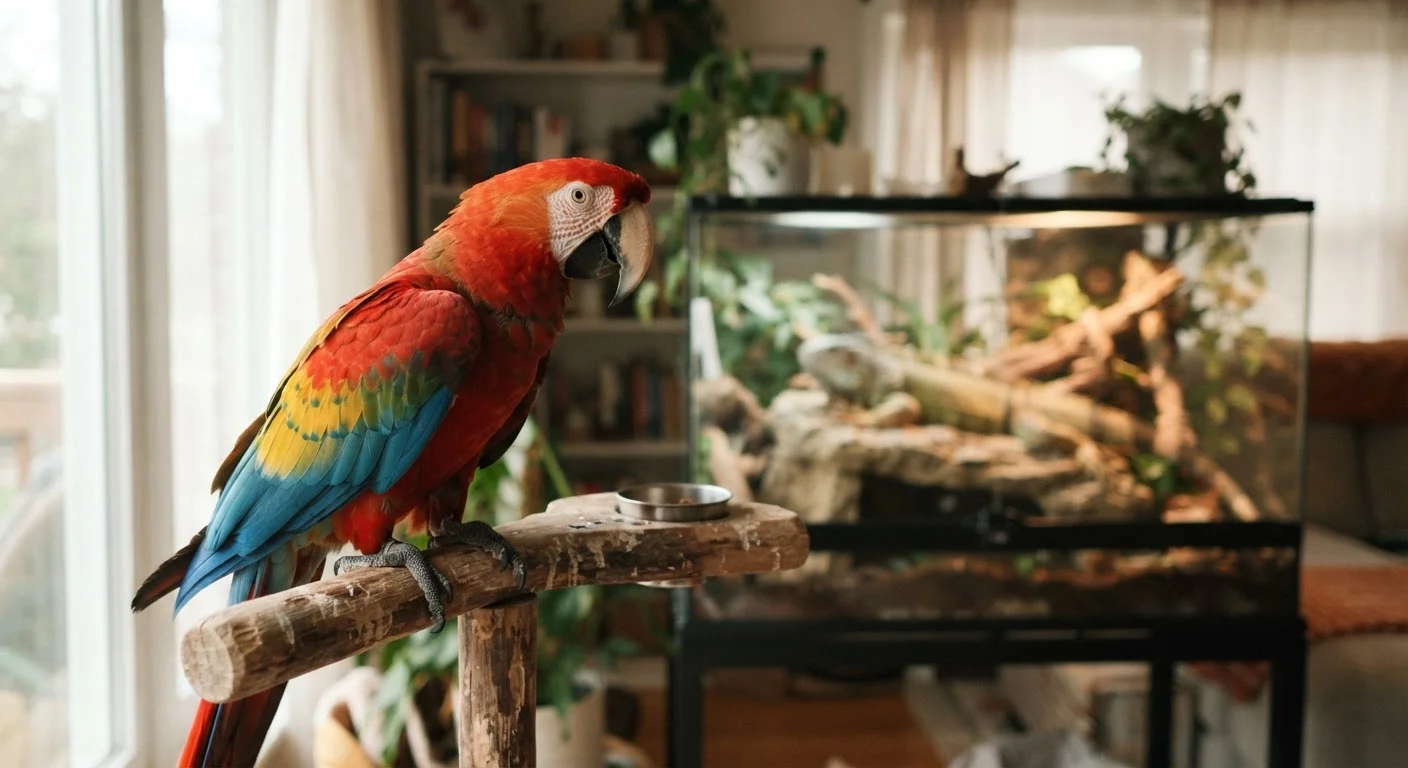
A sulcata tortoise can live 70-100 years; a macaw, 50-60 years. Many owners have not planned for what happens to these animals across major life changes - relocation, illness, or death - making surrender or rehoming inevitable.
Legal risks are real and easily overlooked
State and local laws governing exotic pet ownership change, and animals that were legal to acquire may later be prohibited. Owners can face fines, forced surrender, and legal liability without realizing their pet's status had changed.
Surrender Rates Are a Significant Problem
Wildlife sanctuaries and exotic animal rescues across the U.S. consistently report that a large proportion of surrendered animals arrive in poor condition - often suffering from metabolic bone disease, respiratory infections, or behavioral deterioration caused by years of suboptimal care. Many sanctuaries have lengthy waitlists and cannot accept new animals. If you are considering an exotic pet, building a realistic exit plan before you acquire the animal is a responsible part of the process.
For a broader comparison of what different types of pets actually demand from their owners, the guide on small pets versus dogs and cats provides useful context across species categories.
Legal and Veterinary Realities You Must Know First
Before acquiring any exotic animal, prospective owners should research two non-negotiable areas: legality and veterinary access.
Legal restrictions on exotic pet ownership vary significantly by state, county, and municipality. Species that are legal to own in one state may be prohibited - or require a permit - in another. Federal protections under the Endangered Species Act and the Lacey Act also apply to many wild-origin species. Violating these laws can result in substantial fines, animal seizure, and criminal charges.
Veterinary access is a parallel concern. Most general-practice veterinarians are not trained to treat reptiles, birds, or exotic mammals. Finding a qualified exotic-animal veterinarian - and confirming they treat your specific species - should happen before you bring an animal home, not after a health crisis develops. In rural areas, this access may simply not exist within a reasonable distance.
Anyone approaching exotic pet ownership for the first time would benefit from reading what new pet owners are rarely told upfront before committing to a species.
This article is for general informational and educational purposes only. It does not constitute legal, veterinary, or professional animal care advice. Always consult a licensed veterinarian familiar with your species and verify all applicable laws in your jurisdiction before acquiring an exotic animal.
The content on this site is provided for informational purposes only and should not be considered a substitute for professional advice. While we strive to provide accurate and up-to-date information, we make no guarantees regarding its completeness or accuracy. Always consult a qualified professional for advice specific to your circumstances before making any decisions.