

Why Sitting at a Desk Is a Specific Health Challenge
Most Americans with desk jobs understand that sitting all day isn't ideal - but the specifics matter. Research consistently shows that prolonged, unbroken sitting is independently associated with cardiovascular risk, metabolic changes, and musculoskeletal strain, even among people who meet standard physical activity guidelines outside of work. In other words, an evening gym session doesn't fully cancel out eight hours of continuous sitting.
The mechanism is partly circulatory: extended stillness slows blood flow, reduces muscle activity, and affects how the body processes blood sugar and fats. Over time, these effects can accumulate. For a deeper look at what extended inactivity does to the body, see what a sedentary lifestyle does to the body over time.
The good news: you don't need a standing desk or a treadmill workstation to make meaningful progress. What matters most is frequency of movement breaks - and that's something nearly anyone can work toward.
Proven Practices for Moving More During the Workday
The following strategies are grounded in occupational health research and behavioral science. They prioritize low friction - because habits that are easy to start are habits that stick.
Set a movement reminder every 30 to 60 minutes during your workday
Research from organizations including the American Heart Association suggests breaking up sitting at least once per hour. Regular micro-breaks prevent the circulatory slowdown associated with continuous sitting and are more effective than compensating with one long walk at lunch.
Replace at least one seated meeting per day with a walking meeting
Walking meetings accumulate significant daily step counts without requiring any extra time. They also tend to produce shorter, more focused conversations, according to organizational research.
Use natural transition points - coffee, printing, restroom breaks - as built-in movement cues
Habit stacking, the practice of anchoring a new behavior to an existing routine, is one of the most durable behavior-change techniques in behavioral science. It requires no additional willpower or scheduling.
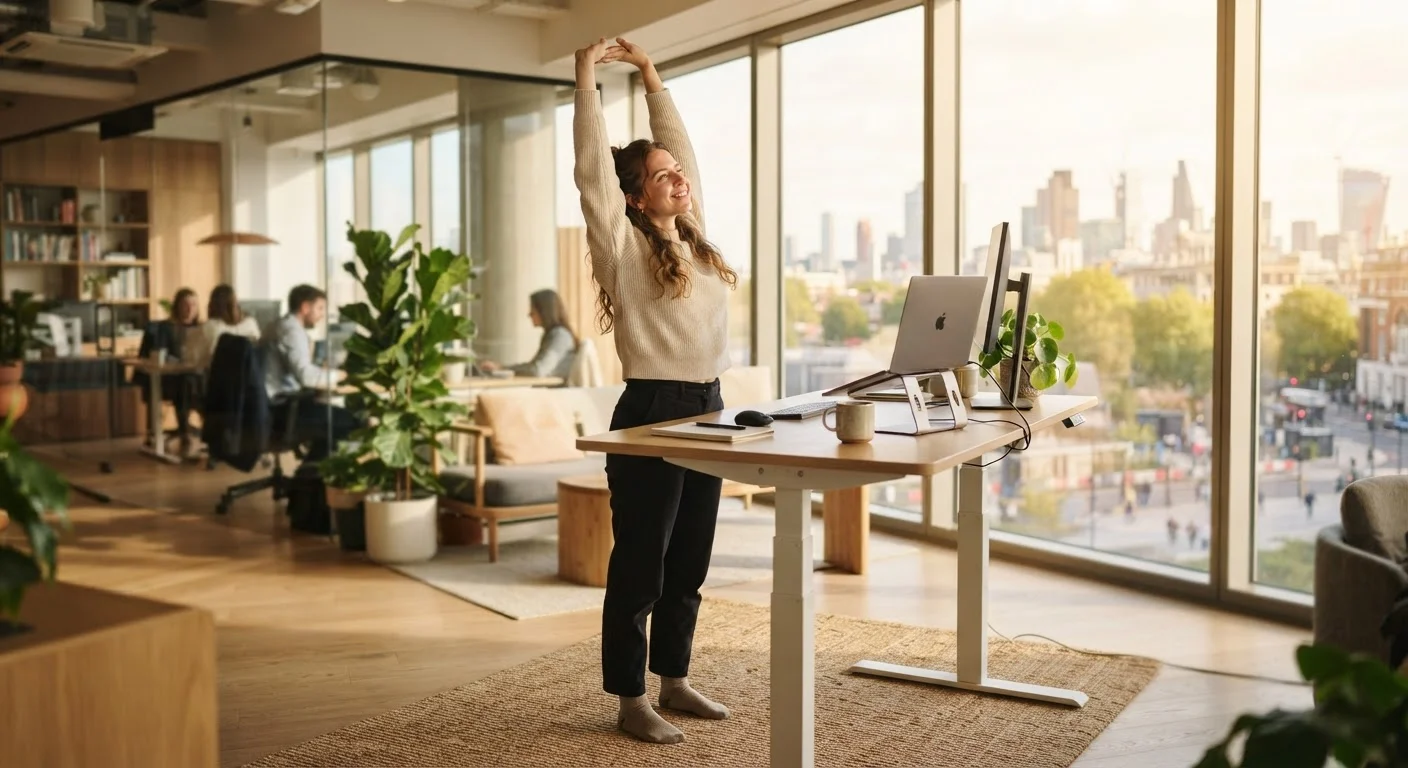
Incorporate desk-based stretches targeting the hip flexors, shoulders, and neck
Prolonged sitting tightens the hip flexors and anterior shoulder muscles while weakening the posterior chain. Targeted stretching during the day helps counteract postural strain before it becomes chronic discomfort.
Stand during low-cognitive tasks such as reading emails or attending passive webinars
Not all seated time is equally necessary. Identifying tasks that don't require typing or fine motor precision creates natural windows to stand without disrupting productivity.
Quick Wins You Can Start Today
You don't need to overhaul your schedule to start reducing sedentary time. These small, immediate actions can shift your movement patterns right away.
For readers looking to build on these habits, building a weekly exercise habit from scratch offers a practical framework that requires no gym and no prior fitness experience.
Movement, Mental Energy, and the Bigger Picture
Physical movement during the workday isn't only a body issue - it has documented links to cognitive performance, mood regulation, and stress management. Brief activity breaks have been shown in multiple studies to modestly improve focus and reduce mental fatigue compared to uninterrupted seated work.
77 min
Daily activity to offset sedentary risk
A 2020 analysis in The BMJ suggested roughly 60-75 minutes of moderate-intensity activity per day may be needed to counteract the mortality risks associated with eight hours of sitting - more than most guidelines recommend.
~30%
Reduction in fatigue with activity breaks
Studies reviewed by the International Journal of Environmental Research and Public Health found that short bouts of physical activity during sedentary work were associated with meaningful reductions in self-reported fatigue and improved alertness.
This connection matters especially for desk workers navigating high workloads. If burnout is also a concern, approaches to managing workplace burnout outlines evidence-informed strategies that pair well with physical activity habits. And if you're looking for a low-barrier movement form that delivers outsized benefits, the case for walking explains why a simple walk remains one of the most effective things you can do for your health. These physical activity habits fit naturally into the broader picture of lifestyle habits that support preventive health goals.
This article is for general informational and educational purposes only and is not a substitute for professional medical advice. Consult a qualified healthcare provider before making significant changes to your physical activity routine, especially if you have an existing health condition.
The content on this site is provided for informational purposes only and should not be considered a substitute for professional advice. While we strive to provide accurate and up-to-date information, we make no guarantees regarding its completeness or accuracy. Always consult a qualified professional for advice specific to your circumstances before making any decisions.