

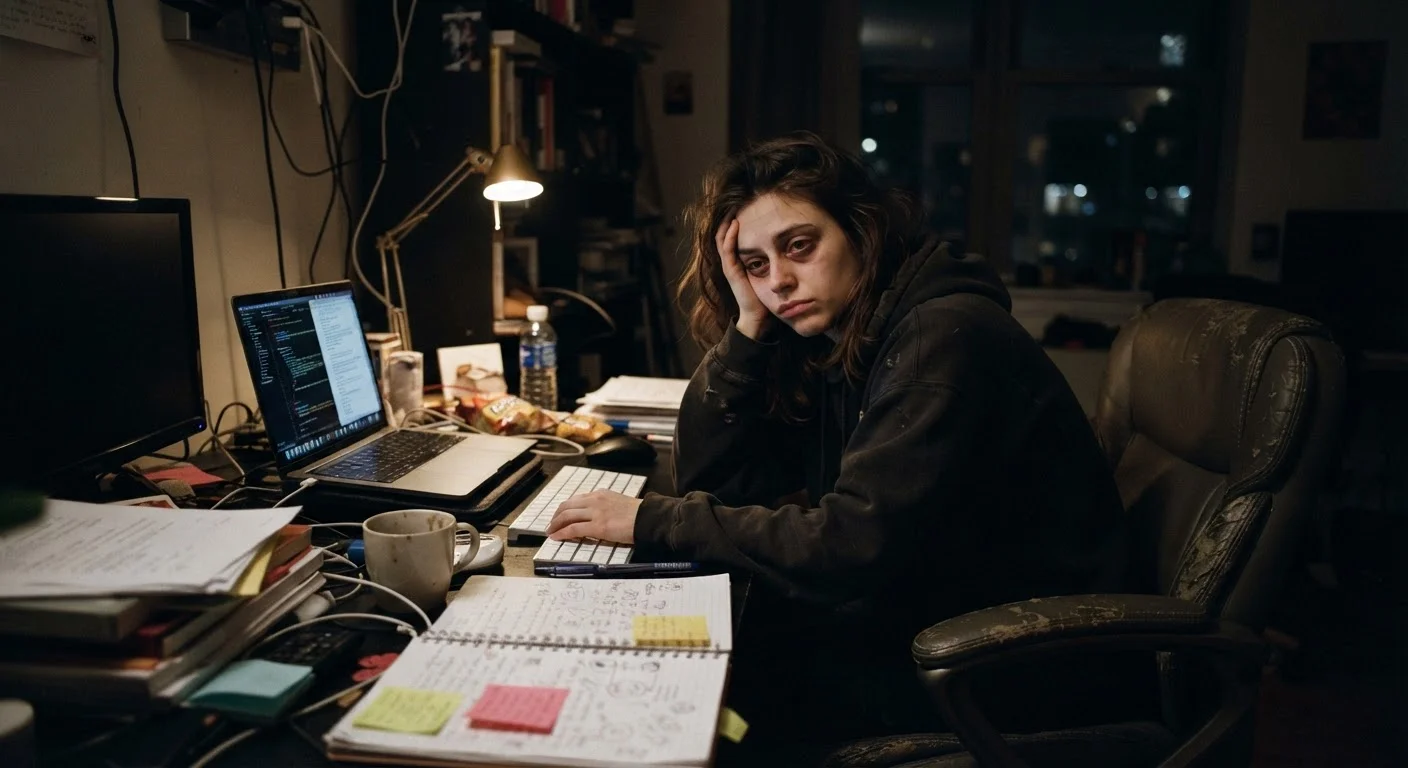
Why Emotional Resilience Erodes Gradually
Emotional resilience - the capacity to adapt, recover, and move forward after stress or adversity - is not a fixed trait. Research in psychology consistently shows it is shaped by daily behavior. The challenge is that the habits most likely to undermine it rarely feel harmful in the moment. They are ordinary, socially accepted, and often disguised as coping strategies.
Understanding which routines quietly drain this capacity can help you make more intentional choices. This is not about perfection, but pattern recognition. For a deeper look at what prolonged stress does to the brain and body when resilience is already low, see what chronic stress actually does to your body and mind.
This article is for general informational and educational purposes only. It is not a substitute for professional mental health advice, diagnosis, or treatment. If you are struggling with your mental health, please consult a qualified healthcare provider.
Common Habits That Undermine Emotional Resilience
The following patterns are widely practiced yet frequently overlooked as contributors to emotional fragility. Each one has a documented mechanism for eroding the mental resources we rely on when life gets hard.
Sacrificing sleep to stay productive or unwind with late-night screens.
Why it happens: Sleep feels like a flexible variable - something to cut when schedules are tight. Many people also use late-night screen time as a way to decompress after a stressful day.
Avoiding or suppressing difficult emotions rather than acknowledging them.
Why it happens: Pushing discomfort aside feels like staying functional. Many people are taught - implicitly or explicitly - that visible distress is a weakness or an inconvenience to others.
Filling every quiet moment with passive scrolling or background media consumption.
Why it happens: Constant stimulation offers immediate relief from boredom or anxiety. Smartphones make this frictionless - an idle moment almost automatically triggers a reach for the phone.
Withdrawing from social connection when stressed, instead of maintaining contact.
Why it happens: Stress often makes social interaction feel like additional effort rather than a resource. Canceling plans or going quiet feels like self-protection.
Treating self-care as all-or-nothing, abandoning routines when life gets busy.
Why it happens: People often frame supportive habits as optional extras that must be earned or that only fit into a perfectly calm schedule. When things get hard, these habits are the first to go - precisely when they are most needed.
~1 in 3
U.S. adults not getting enough sleep
According to the Centers for Disease Control and Prevention (CDC), roughly one in three American adults regularly sleep less than the recommended seven hours per night.
43%
Adults reporting stress-related social withdrawal
The American Psychological Association's Stress in America surveys have consistently found that a significant portion of adults report pulling away from others as a primary stress response.
Shifting These Patterns Over Time
Awareness alone rarely changes behavior, but it is a necessary starting point. Small, consistent adjustments tend to be more sustainable than sweeping overhauls. Prioritizing sleep, scheduling brief moments of genuine social connection, and building in even a few minutes of quiet reflection can gradually restore emotional reserves.
If you are looking to contrast these habits with ones that actively build resilience, everyday habits that quietly support emotional resilience offers a research-grounded counterpoint. For those who tend to suppress emotions rather than process them, why bottling up stress often makes it worse explains the research behind emotional avoidance. And if a structured wind-down routine feels useful, building a wind-down routine that actually sticks offers a practical framework. If you find these patterns difficult to shift on your own, speaking with a mental health professional is always a reasonable and worthwhile step.
Persistent Emotional Difficulty Warrants Professional Support
If you are consistently struggling to cope, feeling emotionally numb, or finding that daily functioning has become difficult, these are signs that a qualified mental health professional should be consulted. The habits described in this article are general educational information - they are not a diagnostic framework and are not a substitute for personalized care. Seek help if you need it; doing so is a sign of self-awareness, not weakness.
The content on this site is provided for informational purposes only and should not be considered a substitute for professional advice. While we strive to provide accurate and up-to-date information, we make no guarantees regarding its completeness or accuracy. Always consult a qualified professional for advice specific to your circumstances before making any decisions.