

Where the 30% Figure Actually Comes From
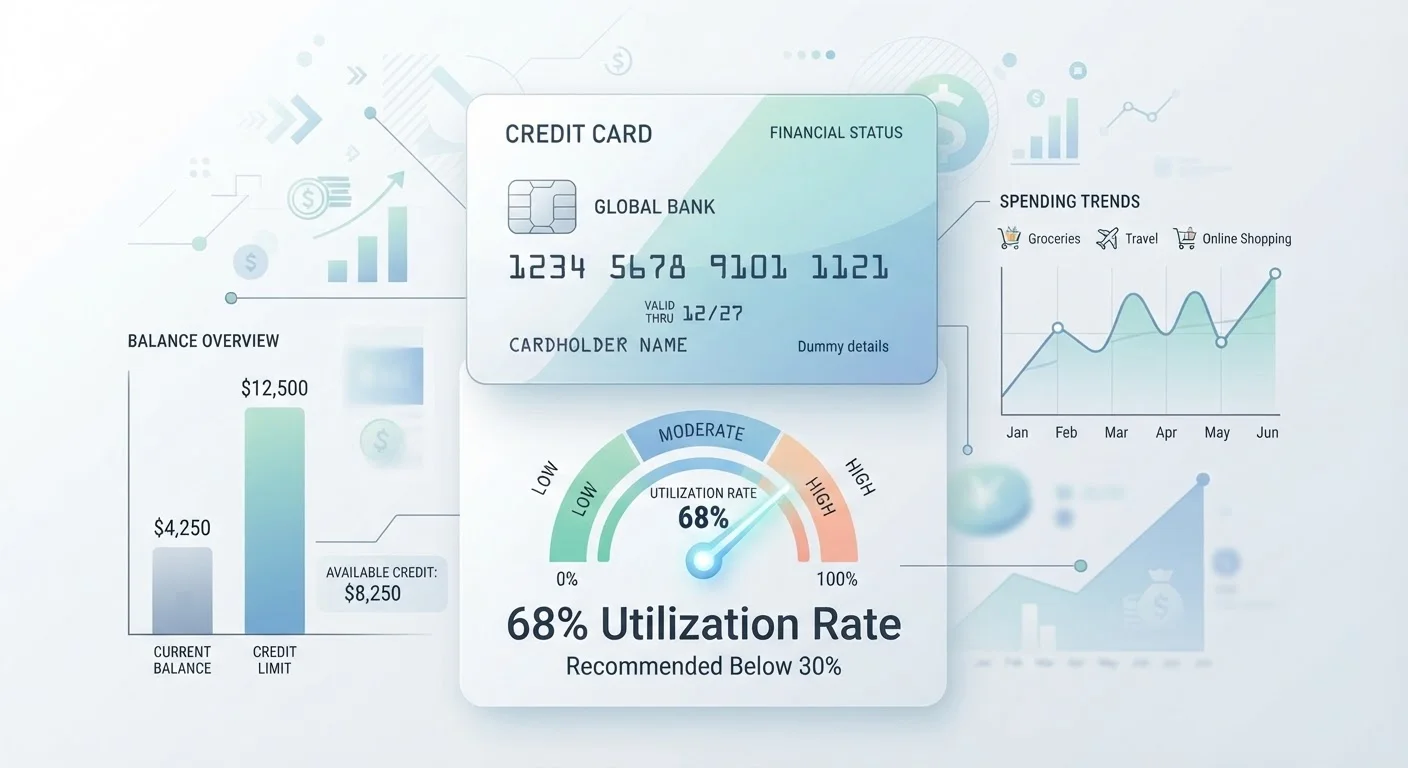
The "keep your utilization below 30%" guideline has become one of the most repeated pieces of credit advice on the internet. But it wasn't handed down from a scoring algorithm - it emerged as a simplified rule of thumb from financial educators trying to give consumers a memorable boundary to work toward.
Scoring models themselves don't treat 30% as a threshold where scores suddenly drop. FICO and VantageScore both treat utilization as a continuous variable: lower is better, across the entire range. The relationship isn't a cliff - it's a slope. As your utilization climbs from 1% to 10% to 20% to 30% and beyond, the negative scoring impact accumulates gradually.
To understand how utilization fits into the full picture, see how each of the five scoring factors works - utilization falls under the "amounts owed" category, which carries significant weight.
~30%
Weight of "amounts owed" in FICO scoring
FICO's published scoring breakdown shows amounts owed - the category containing utilization - is the second most influential factor after payment history.
~7%
Average utilization among 800+ FICO scorers
FICO data indicates that consumers in the highest score tier tend to use only a small fraction of their available revolving credit.
1-2 months
Typical time to see utilization changes reflected
Because utilization is recalculated each billing cycle, paying down balances can show up in your score relatively quickly compared to other scoring factors.
What High Scorers Actually Do
FICO has published data showing that consumers with scores above 800 carry an average utilization rate around 7%. That's not a coincidence. Scoring models reward borrowers who demonstrate they can access credit without depending on it heavily. Sitting at 29% utilization may keep you out of the "danger zone" in simplified advice, but it won't put you in the same tier as someone at 5%.
This doesn't mean you need to obsess over achieving a 3% ratio. The practical insight is that "below 30%" should be treated as a floor, not a goal. If you're working toward an excellent score - whether to qualify for a mortgage or secure better lending terms - pushing utilization into the low teens or single digits will produce meaningfully better outcomes than hovering near the commonly cited ceiling.
For a broader look at what the numbers in your score actually signal to lenders, see how credit score ranges are defined and interpreted.
Time Your Payments Strategically
Your card issuer typically reports your balance to credit bureaus on your statement closing date - not your payment due date. If you want a lower balance reflected in your score, pay down your card before the statement closes, not just before the due date. This simple timing adjustment can meaningfully reduce your reported utilization without changing your overall spending.
Per-Card Utilization: The Detail Most People Miss
Aggregate utilization - your total balances divided by your total limits - is what most people focus on. But scoring models also evaluate utilization on each individual account. A single maxed-out card can drag down your score even if every other card has a zero balance and your overall ratio looks fine.
This matters practically. If you have three cards and concentrate spending on one while leaving the others untouched, that card's individual utilization may be 80% or 90% even if your combined ratio is 25%. Spreading charges across multiple cards - or making mid-cycle payments to keep any single card's balance in check - can protect your per-card ratios alongside your overall utilization.
Some of the most persistent misconceptions about how this works are addressed in common credit myths that hold people back, including the popular but incorrect belief that carrying a small balance builds credit faster than paying in full.
Practical Strategies for Managing Utilization
Because utilization is recalculated every billing cycle based on reported balances, it's one of the more responsive credit factors. Changes you make today can appear on your credit report within a month or two, making it a productive area to focus on when you're actively trying to improve your score.
- Pay before your statement closes: Most issuers report the balance shown on your statement. Paying down balances before that date lowers what gets reported, even if you always pay in full by the due date.
- Request a credit limit increase thoughtfully: A higher limit reduces your ratio if spending stays constant, though some issuers run a hard inquiry when processing the request.
- Distribute spending across cards: Avoid concentrating charges on a single card, especially if that card has a lower limit relative to your others.
- Treat 30% as a ceiling, not a target: If you have room to get below 10%, the scoring benefit of doing so is real and worth pursuing.
This article is for general educational purposes and does not constitute personalized financial advice. Consult a qualified financial professional for guidance specific to your situation.
Frequently Asked Questions
Thirty percent is often cited as the upper boundary of an acceptable range, not an ideal target. Keeping utilization below 30% is better than exceeding it, but lower is generally better. Borrowers with the strongest scores typically maintain utilization in the low single digits.
Yes - paying your balance in full reduces the balance that gets reported to credit bureaus. However, the timing matters. Most card issuers report your balance on your statement closing date, not your payment due date. Paying before the statement closes can result in a lower reported balance.
Having zero utilization on all accounts can sometimes be slightly less favorable than maintaining a very small balance, because it may signal to scoring models that accounts are inactive. Using your card lightly and paying it off generally produces the best outcome.
Because utilization is recalculated each billing cycle, score improvements from paying down balances can show up within one to two months once the lower balance is reported. This makes it one of the faster-acting levers available to borrowers.
Yes - if your spending stays constant, a higher credit limit lowers your utilization ratio mathematically. However, requesting a limit increase may trigger a hard inquiry depending on the issuer, which can have a small, temporary effect on your score.
Utilization calculations apply to revolving credit accounts, primarily credit cards and lines of credit. Installment loans like mortgages and auto loans are not factored into the utilization ratio, though they influence other scoring components.
The content on this site is provided for informational purposes only and should not be considered a substitute for professional advice. While we strive to provide accurate and up-to-date information, we make no guarantees regarding its completeness or accuracy. Always consult a qualified professional for advice specific to your circumstances before making any decisions.