

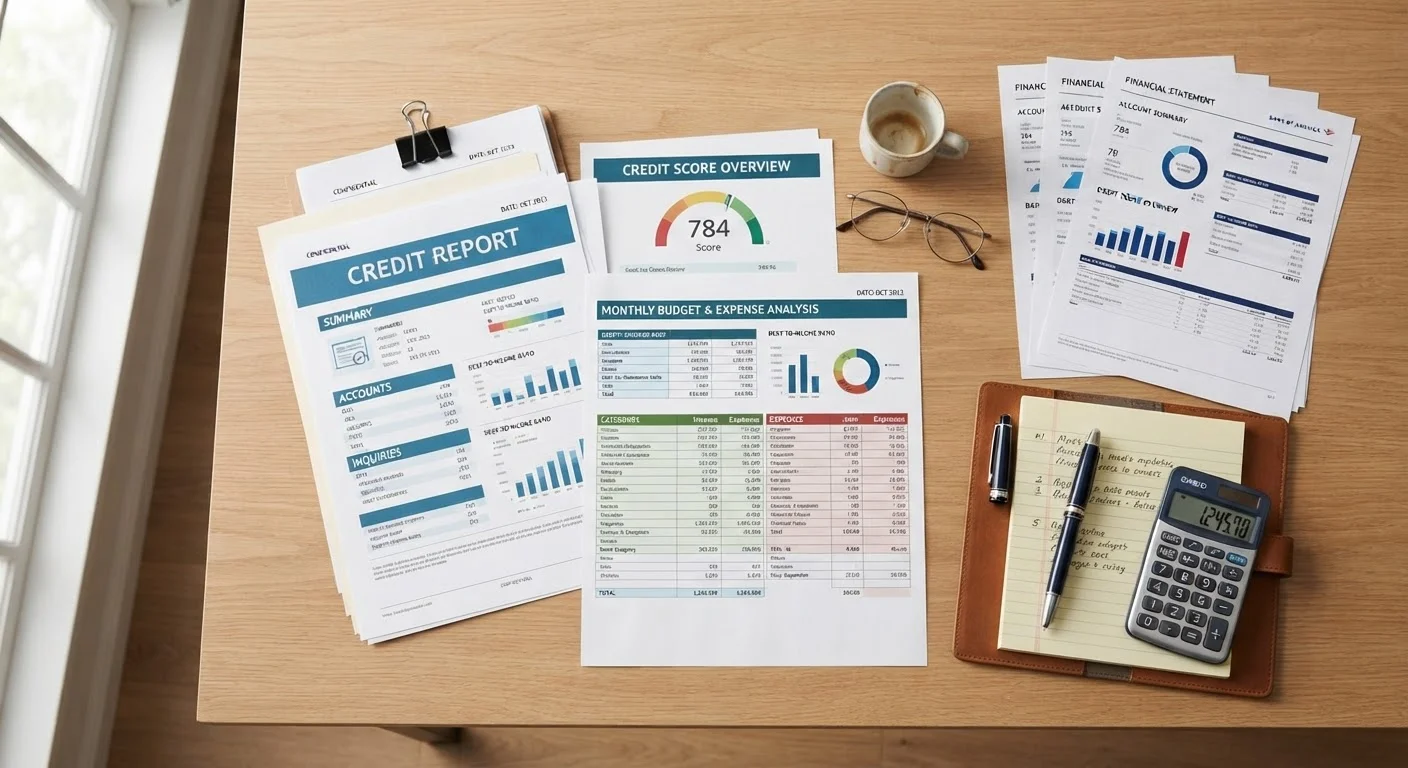
How Credit Scores Work
A credit score is a three-digit number - most commonly ranging from 300 to 850 - that summarizes how reliably you've managed borrowed money. Lenders use it to decide whether to extend credit and at what interest rate. The most widely used scoring model, FICO, calculates your score from five components:
- Payment history (35%): Whether you've paid past accounts on time.
- Amounts owed (30%): How much of your available credit you're currently using, known as your credit utilization ratio.
- Length of credit history (15%): How long your accounts have been open.
- Credit mix (10%): The variety of account types you carry (credit cards, installment loans, mortgages).
- New credit (10%): Recent applications for new credit, which trigger hard inquiries.
A score above 670 is generally considered "good" by most lenders. Scores above 740 typically unlock the most favorable interest rates. Scores below 580 are often labeled "poor" and can limit your access to credit or result in significantly higher borrowing costs.
Check your utilization on each individual card, not just your overall total. A single maxed-out card can drag your score down even if your combined utilization looks fine.
FICO scoring evaluates per-card utilization as well as aggregate utilization, so a concentrated balance on one account carries outsized penalty.
Request a credit limit increase on a card you keep at a low balance. If approved without a hard inquiry, your utilization ratio drops immediately without you paying a dollar extra.
Because utilization is calculated as balance divided by limit, raising the denominator achieves the same mathematical effect as reducing the balance.
Types of Debt and How Lenders View Them
Not all debt carries the same weight in a lender's eyes or on your credit report. Understanding the distinction helps you prioritize smarter.
Revolving Debt
Credit cards and lines of credit are revolving - you borrow, repay, and borrow again up to a set limit. Your utilization ratio (balance divided by limit) on revolving accounts is a major scoring factor. Carrying a balance above 30% of your limit on any single card, or across all cards combined, can noticeably reduce your score.
Installment Debt
Auto loans, student loans, and mortgages are installment accounts - fixed amounts repaid in scheduled payments over a defined term. These contribute to credit mix and demonstrate long-term payment reliability, but they don't affect utilization the same way revolving accounts do.
Collections and Charged-Off Accounts
When a debt goes unpaid long enough, a lender may charge it off (write it off as a loss) or sell it to a collections agency. Both events cause significant score damage and remain on your credit report for up to seven years from the original delinquency date.
35%
Payment history weight in FICO score
According to FICO, payment history is the single largest factor in a standard credit score calculation.
1 in 5
Americans with a credit report error
A Federal Trade Commission study found approximately one in five consumers had a verifiable error on at least one of their three credit reports.
7 years
How long negative items stay on your report
Most negative marks - including late payments, charge-offs, and collections - remain on a credit report for seven years under FCRA rules.
Reading Your Credit Report
Your credit report is the raw data behind your score. Under federal law, you're entitled to one free report from each of the three major bureaus - Equifax, Experian, and TransUnion - through AnnualCreditReport.com. Each bureau may have slightly different information, so reviewing all three matters.
Key sections to examine:
- Personal information: Verify your name, address, and Social Security number are correct. Errors here can indicate identity fraud.
- Account history: Review open and closed accounts for accuracy in balances, payment history, and dates.
- Inquiries: Hard inquiries from credit applications stay on your report for two years; soft inquiries (like checking your own score) don't affect your score.
- Public records and collections: Look for any entries you don't recognize or believe are inaccurate.
If you find an error, you have the right to dispute it with the bureau in writing. The bureau must investigate within 30 days under the Fair Credit Reporting Act (FCRA). For a deeper look at report terminology, see the credit report terms reference guide.
Payoff Strategies That Actually Work
Two structured methods dominate personal finance guidance on debt payoff, and both are effective - the right choice depends on your financial situation and psychology.
The Debt Avalanche
Pay minimum payments on all debts, then direct every extra dollar toward the account with the highest interest rate. Once that's eliminated, roll that payment to the next highest-rate debt. This approach minimizes total interest paid over time.
The Debt Snowball
Pay minimums everywhere, then attack the smallest balance first regardless of interest rate. Once a balance reaches zero, apply that freed-up payment to the next smallest. The momentum of quick wins tends to keep people motivated and on track.
Research suggests both methods work when followed consistently. The avalanche is mathematically optimal; the snowball can be behaviorally optimal for people who need early victories to stay committed. For a side-by-side comparison with real numbers, see how the avalanche and snowball compare.
If you're starting from scratch and need a structured framework for listing and scheduling payments, building a realistic debt payoff plan walks through the process step by step.
How Debt Payoff Affects Your Credit Score
Paying off debt almost always helps your score over time, but a few nuances are worth knowing:
- Paying down credit card balances delivers the fastest score improvement because it directly lowers your utilization ratio - often within one billing cycle.
- Closing a paid-off credit card can temporarily reduce your score by shrinking your total available credit and potentially shortening your average account age. Consider keeping old cards open with a zero balance if there's no annual fee.
- Paying off an installment loan may cause a small, temporary dip because it reduces your credit mix, though the long-term benefit of a clean payment history outweighs this.
- Settled accounts (where you negotiate to pay less than owed) are marked as "settled" rather than "paid in full" and can still negatively affect your score, though less severely than an open delinquency.
Building Credit While Eliminating Debt
You don't have to choose between paying off debt and building credit - the two goals can run in parallel. Consistent on-time payments on any account actively improve your payment history score factor, even while you carry balances.
Practical steps to build credit alongside payoff:
- Automate minimum payments on all accounts to eliminate the risk of a missed payment, which can cause a significant score drop.
- Keep credit utilization below 30% on each card as you pay balances down. If possible, aim for under 10% for the best scoring benefit.
- Avoid opening multiple new accounts at once. Each application generates a hard inquiry, and a cluster of inquiries can signal risk to lenders.
- Monitor your report periodically to ensure your positive payment history is being recorded accurately.
If you're newer to credit or navigating debt for the first time, managing debt and credit when starting from zero provides foundational guidance without assuming prior experience.
This article is for general informational and educational purposes only and does not constitute personalized financial, credit, or legal advice. Consult a qualified financial professional for guidance specific to your situation.
The content on this site is provided for informational purposes only and should not be considered a substitute for professional advice. While we strive to provide accurate and up-to-date information, we make no guarantees regarding its completeness or accuracy. Always consult a qualified professional for advice specific to your circumstances before making any decisions.