

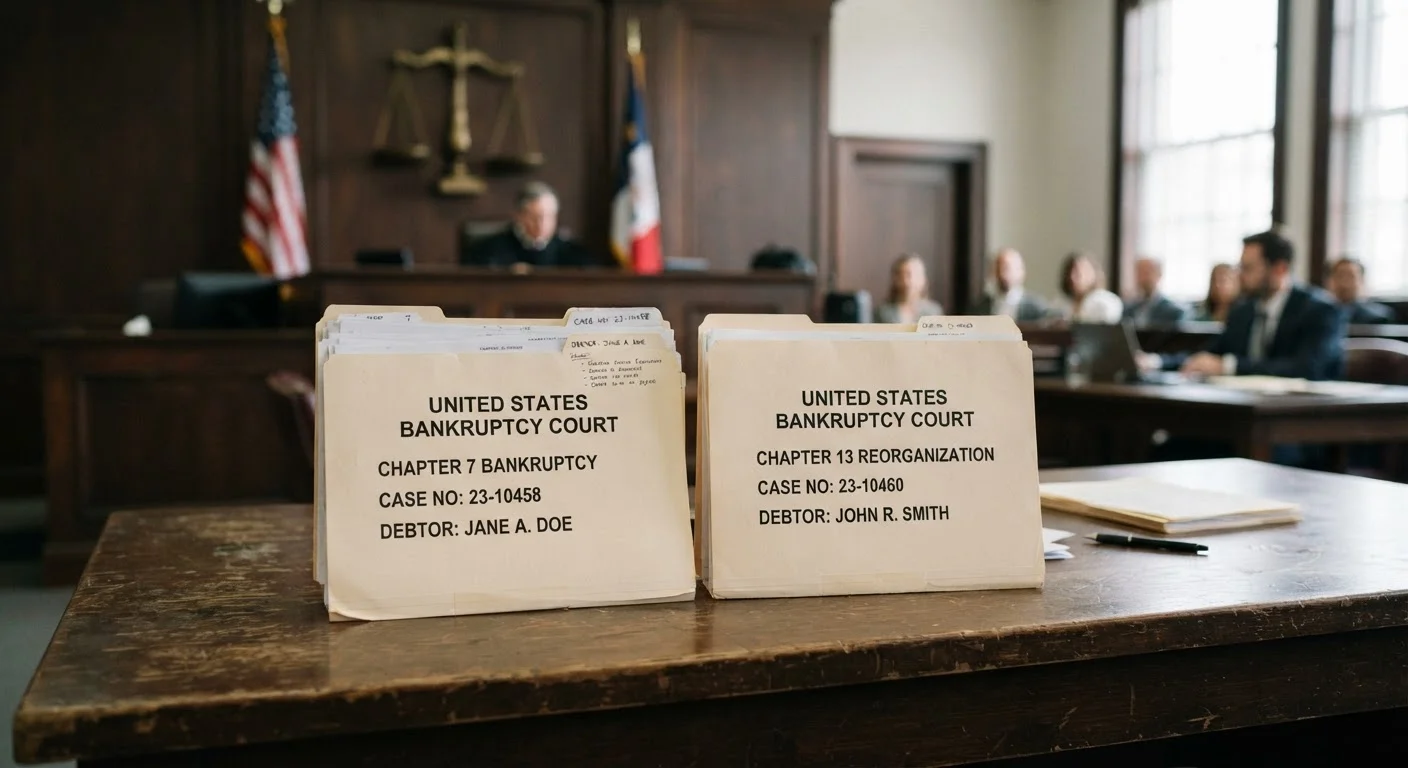
Option A
Chapter 7 Bankruptcy
The faster, liquidation-based debt discharge option.
Best for: Individuals with limited income and primarily unsecured debt who need a quick financial fresh start.
Option B
Chapter 13 Bankruptcy
The structured, repayment-focused path to debt relief.
Best for: Individuals with regular income who want to protect assets like a home while catching up on overdue payments.
What Each Chapter Actually Does
Personal bankruptcy is a federal legal process designed to give individuals overwhelmed by debt a structured path forward. The two chapters most relevant to consumers - Chapter 7 and Chapter 13 - share the goal of debt relief but operate through fundamentally different mechanisms.
Chapter 7, often called liquidation bankruptcy, works by having a court-appointed trustee review your assets. Non-exempt assets may be sold to repay creditors. In exchange, most remaining qualifying unsecured debts - credit card balances, medical bills, personal loans - are discharged, meaning legally eliminated. The process typically concludes in three to six months.
Chapter 13, sometimes called reorganization bankruptcy, does not eliminate debt immediately. Instead, you propose a repayment plan lasting three to five years, approved by a bankruptcy court, which pays back some or all of what you owe based on your income and expenses. Debts remaining at the end of the plan period may then be discharged.
Understanding how secured and unsecured debt differ is important here - Chapter 7 is generally more effective at eliminating unsecured obligations, while Chapter 13 provides tools to address secured debts like mortgages or car loans without surrendering the underlying asset.
| Criterion | Chapter 7 | Chapter 13 |
|---|---|---|
| Process type | Liquidation | Reorganization / Repayment |
| Typical timeline | 3-6 months | 3-5 years |
| Income eligibility | Must pass means test | Must have regular income |
| Asset protection | Non-exempt assets may be sold | Assets generally kept |
| Best for unsecured debt | Yes - discharged quickly | Partially - repaid over plan |
| Stops foreclosure | Temporarily (automatic stay) | Yes - can cure arrears in plan |
| Credit report impact | 10 years | 7 years |
| Student loans discharged | Generally no | Generally no |
Eligibility, Exemptions, and What Happens to Your Assets
Not everyone qualifies for Chapter 7. Filers must pass a means test, which compares their income to the median income for their state and household size. If income is too high, the court may require a Chapter 13 filing instead.
Both chapters allow filers to claim exemptions - categories of property protected from creditors. These vary by state but commonly include a primary residence up to a certain equity value (homestead exemption), a vehicle up to a dollar threshold, retirement accounts, and basic household goods. In Chapter 7, non-exempt property can be liquidated. In Chapter 13, you keep your assets but must repay creditors at least as much as they would have received in a Chapter 7 liquidation.
~67%
Share of personal filings that are Chapter 7
According to U.S. Courts data, Chapter 7 consistently accounts for the large majority of non-business bankruptcy filings in the United States.
7-10 years
Bankruptcy remains on credit report
Chapter 13 stays on a credit report for seven years from the filing date, while Chapter 7 stays for ten years, per standard credit bureau reporting rules.
180 days
Credit counseling required before filing
Federal bankruptcy law mandates that filers complete credit counseling from an approved nonprofit agency within 180 days before submitting a bankruptcy petition.
Certain debts are not dischargeable under either chapter. These typically include most student loans, child support and alimony, recent income tax debts, and debts arising from fraud. Filers should not assume bankruptcy will resolve every financial obligation.
Before filing either chapter, federal law requires credit counseling from an approved agency within 180 days. If you're weighing bankruptcy against other strategies, our overview of how debt consolidation works and its trade-offs may be a useful starting point.
Long-Term Credit and Financial Consequences
Both Chapter 7 and Chapter 13 have lasting effects on your credit profile and overall financial life. Chapter 7 remains on a credit report for ten years from the filing date; Chapter 13 remains for seven years. Either entry can significantly affect your ability to obtain new credit, rent housing, or qualify for certain employment during that period.
That said, many filers begin rebuilding credit within a year or two of discharge by using secured credit cards responsibly and maintaining on-time payments on any remaining obligations. The path is gradual but achievable.
Bankruptcy is generally considered a last resort after other debt management strategies have been evaluated or exhausted. If you're navigating competing financial priorities, it can help to first understand how to balance saving and debt repayment simultaneously, and to explore building a realistic debt-free plan before committing to a legal filing.
Bankruptcy law is complex, and individual circumstances vary considerably. Speaking with a licensed bankruptcy attorney or HUD-approved credit counselor before making any filing decision is strongly advisable.
This article is for general informational and educational purposes only. It does not constitute legal, financial, or tax advice. Readers should consult a qualified bankruptcy attorney or licensed financial professional regarding their specific situation.
The content on this site is provided for informational purposes only and should not be considered a substitute for professional advice. While we strive to provide accurate and up-to-date information, we make no guarantees regarding its completeness or accuracy. Always consult a qualified professional for advice specific to your circumstances before making any decisions.