

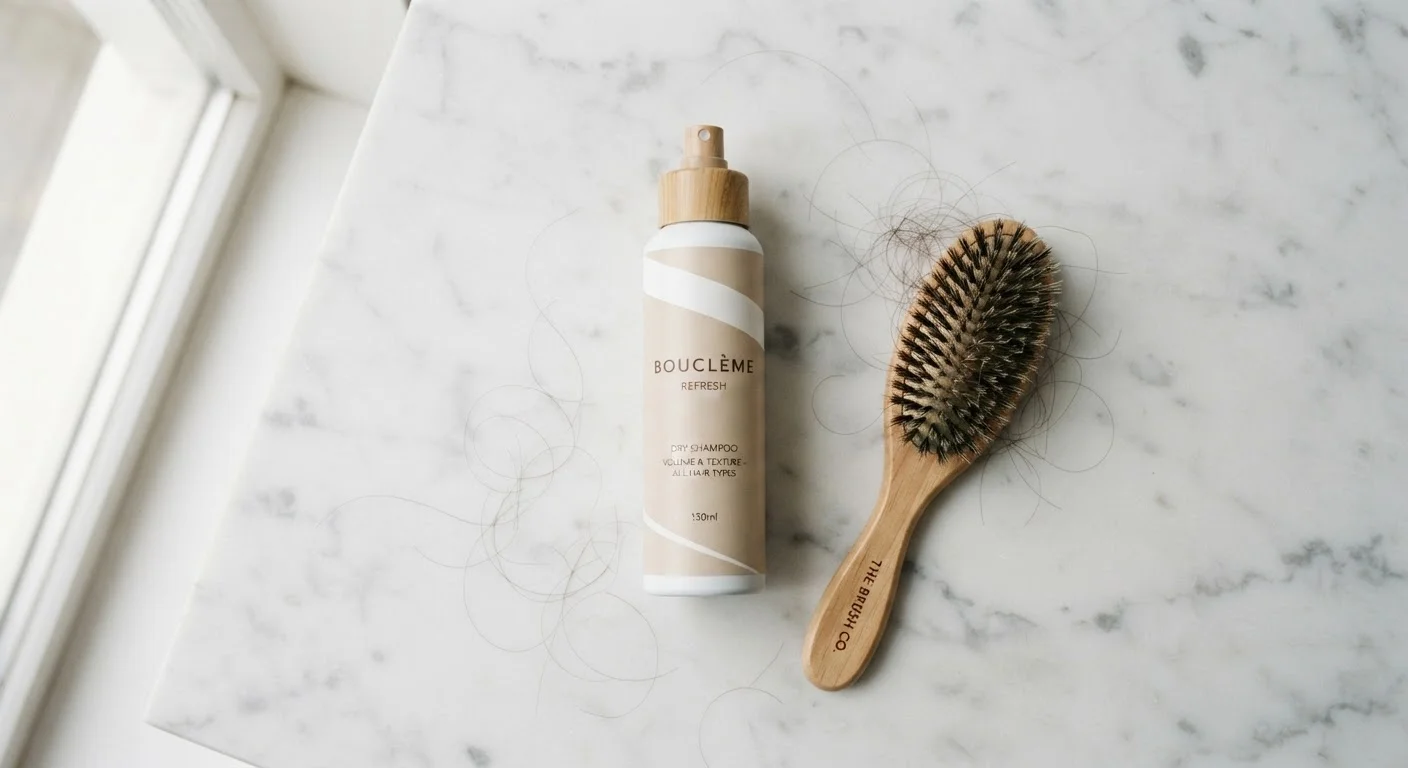
Our Verdict
Dry shampoo is a genuinely useful tool when used occasionally and correctly - it freshens hair, saves styling time, and can reduce mechanical damage from frequent wet washing. However, treating it as a substitute for regular cleansing is where problems begin. Consistent overuse is associated with follicle congestion, scalp inflammation, and in some cases, conditions like folliculitis.
Dry shampoo works best for people with normal to oily hair who occasionally need to extend a blowout or manage oiliness between scheduled washes - not as a daily scalp care strategy.
What Dry Shampoo Actually Does
The name is a little misleading. Dry shampoo doesn't shampoo anything - it absorbs. Most formulas rely on starches (like rice or corn starch), alcohol, or clay-based powders to soak up sebum and sweat at the roots, leaving hair looking and feeling less oily. Aerosol versions disperse these particles via a propellant; powder formulas are applied directly and massaged in by hand.
What dry shampoo doesn't do is remove dirt, dead skin cells, styling product residue, or microbial buildup from the scalp. That distinction matters enormously for anyone thinking about replacing regular washes with it. For a deeper look at how wash frequency affects your scalp's oil balance, see our article on washing your hair every day vs. every few days.
Extends time between washes without visible greasiness
By absorbing excess sebum at the roots, dry shampoo can make hair look freshly washed for an additional day or two - useful for preserving blowouts or managing second-day hair.
Reduces heat styling frequency
Skipping a wash means skipping the blow-dry. Fewer heat-styling sessions mean less thermal damage to the hair shaft over time, which can benefit overall strand integrity.
Adds texture and volume at the roots
The absorbent particles in dry shampoo add grip and lift, which many people find useful for fine or limp hair that loses volume quickly after washing.
Convenient for active lifestyles and travel
Post-workout refreshes, gym bags, and travel all present situations where a full wash isn't practical. Dry shampoo offers a quick, portable fix for managing oiliness on the go.
The Pros: Why It Earned a Place in the Routine
Used selectively, dry shampoo offers several real benefits that make it a staple for time-pressed mornings, post-gym touch-ups, and preserving elaborate styles.
~70%
Americans who skip daily hair washing
Survey data from hair care industry research consistently suggests the majority of Americans wash their hair fewer than seven times per week, making between-wash products like dry shampoo widely relevant.
2 days
Recommended maximum consecutive dry shampoo use
Most dermatologists and trichologists advise against using dry shampoo for more than two consecutive days before cleansing the scalp thoroughly with water and shampoo.
The Cons: Where Overuse Creates Problems
Dry shampoo's convenience can quietly mask scalp issues - or create new ones. The core problem is accumulation. When starch or clay particles build up on the scalp without being properly rinsed away, they can block follicle openings, trap bacteria, and create an environment that promotes inflammation.
Product buildup can clog hair follicles
Starch and clay particles that accumulate at the follicle opening without proper rinsing can interfere with normal sebum flow and potentially contribute to folliculitis - an inflammation of the hair follicle.
Doesn't remove bacteria or dead skin
The scalp sheds skin cells and hosts natural microbial populations. Dry shampoo absorbs oil but leaves everything else behind, allowing cellular debris and bacteria to accumulate over time.
Aerosol inhalation is a concern with prolonged use
Some aerosol dry shampoos contain propellants and fine particle sprays that can be inhaled during application. Using them in poorly ventilated spaces or excessively may pose respiratory concerns for sensitive individuals.
Can cause or worsen scalp irritation and itching
Fragrance, alcohol, and preservative ingredients common in dry shampoo formulas may irritate sensitive scalps, exacerbating conditions like seborrheic dermatitis or contact dermatitis with repeated exposure.
May contribute to hair shedding if overused
While dry shampoo doesn't directly cause hair loss, chronic follicle congestion and scalp inflammation - side effects of heavy, sustained use - can create conditions that stress the hair growth cycle.
Persistent scalp flaking, itching, or unusual hair shedding after heavy dry shampoo use may be worth discussing with a dermatologist. The scalp is skin, and its signals shouldn't be ignored. Our guide on what your scalp is actually telling you explains what common symptoms might indicate.
How to Use It Without Harming Your Scalp
A few practical adjustments can preserve dry shampoo's benefits while reducing its risks.
- Apply at arm's length. Hold aerosol cans at least six to eight inches from the scalp to prevent excessive concentration in one spot.
- Don't let it sit for days. Most dermatologists suggest limiting consecutive dry shampoo days to one or two before a full wash. The longer buildup accumulates, the harder it is to fully rinse away.
- Massage and brush through. Working the product in with fingertips - then brushing - helps distribute it and prevents clumping at the roots.
- Wash thoroughly when you do shampoo. A double cleanse or scalp massage during washing helps dislodge residue that has accumulated between sessions.
Powder vs. Aerosol: Does Format Matter?
Both aerosol sprays and loose powder formulas can be effective, but they carry slightly different considerations. Aerosols deliver finer, more even coverage but raise inhalation concerns if used in enclosed spaces. Powder formulas give more control over placement but can look chalky on darker hair if not worked in thoroughly. Neither format eliminates the buildup risk - that comes down to frequency and proper cleansing, not the delivery system.
If you've ever wondered whether your shower habits are silently affecting your scalp beyond dry shampoo use, common shower habits that quietly damage skin offers a useful reality check on daily routines.
This article is for informational purposes only and does not constitute medical or dermatological advice. If you are experiencing scalp discomfort, persistent irritation, or hair loss, consult a qualified healthcare professional or board-certified dermatologist.
The content on this site is provided for informational purposes only and should not be considered a substitute for professional advice. While we strive to provide accurate and up-to-date information, we make no guarantees regarding its completeness or accuracy. Always consult a qualified professional for advice specific to your circumstances before making any decisions.