

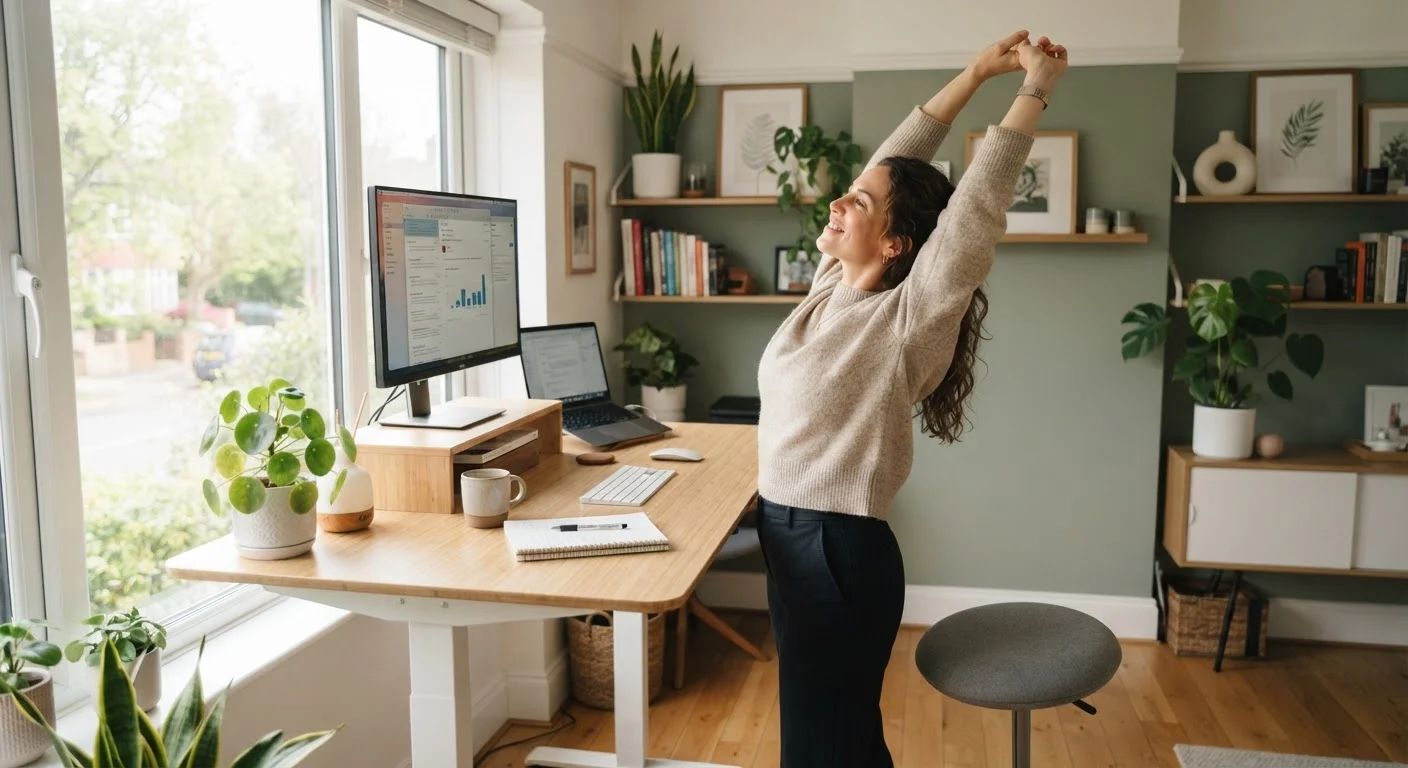
Why Desk Workers Need an Active Strategy
Most American office workers spend six to eight hours seated each day - and that number climbs when you add commuting and evening screen time. Research in exercise science consistently links prolonged, uninterrupted sitting with reduced blood flow to the legs, tightened hip flexors, weakened postural muscles, and dips in alertness and mood. The issue isn't just total daily inactivity; it's the unbroken duration of sitting that matters most.
The encouraging news is that you don't need to overhaul your schedule or join a gym to make a difference. Strategic, small movement habits woven throughout the workday can offset many of these effects and build a foundation for broader fitness over time. These habits are designed to be realistic for people at any fitness level - no prior experience required. For a deeper look at how daily movement connects to long-term health, see everyday habits that support preventive health.
Follow the 30-minute stand-up rule
Exercise physiologists often recommend breaking up sitting at least once every 30 minutes. You don't need to do anything elaborate - simply standing up and shifting your weight for 60 to 90 seconds is enough to restore circulation to your lower limbs. Setting a recurring phone or computer reminder makes this automatic rather than optional. Over time, it becomes a reflex rather than a conscious choice.
Standing for just 60 seconds every 30 minutes is enough to meaningfully restore circulation to your lower limbs.
Use walking meetings for audio-only calls
Any call that doesn't require screen sharing is an opportunity to move. Walking while on a phone call has a dual benefit: it adds low-intensity cardio to your day and - for many people - actually improves focus and verbal fluency. A 20-minute walking call, taken twice daily, can add nearly a mile of movement without carving a single minute from your workday productivity.
A walking call taken twice a day can add nearly a mile of movement without touching your schedule.
Stretch your hip flexors at your desk
Sitting keeps the hip flexor muscles - particularly the iliopsoas - in a persistently shortened position. Over time, this contributes to lower back tension and altered pelvic alignment. A simple standing hip flexor stretch (step one foot back, gently press the hip forward, hold for 20-30 seconds per side) can be done beside your chair between tasks. This is among the highest-value stretches for desk workers because of how directly it counteracts seated posture.
A 30-second standing hip flexor stretch beside your chair directly counters the most common effect of prolonged sitting.
Take the long route deliberately
Micro-decisions about distance add up. Using the restroom on a different floor, parking farther away, or walking to a printer across the office rather than the one beside you may each seem trivial - but they represent dozens of additional steps accumulated across a week. Behavioral researchers refer to this as incidental physical activity, and it contributes meaningfully to overall daily movement totals without requiring any dedicated exercise time.
Incidental activity - deliberately choosing the longer route - adds meaningful steps without requiring dedicated exercise time.
Practice seated posture resets
Good seated posture isn't a static position you hold - it's an active habit you return to. Every hour or so, perform a quick reset: sit back fully in your chair so your lower back contacts the backrest, place both feet flat on the floor, roll your shoulders back and down, and gently draw your chin back to align your ears over your shoulders. This addresses the forward-head and rounded-shoulder position that desk work progressively reinforces throughout the day.
A posture reset takes under 10 seconds and directly counters the forward-head position desk work reinforces over hours.
Add calf raises during standing tasks
Standing at your desk or waiting for a document to print is an underutilized opportunity. Calf raises - rising onto the balls of your feet and slowly lowering back down - activate the calf-muscle pump that helps return blood from your legs to your heart. This is particularly relevant for people who notice leg fatigue or mild swelling after long sitting periods. Three sets of 15 raises can be completed in under two minutes with no visible disruption to your work environment.
Calf raises during standing tasks activate the muscle pump that helps return blood from your legs to your heart.
Build a consistent lunchtime walk
A 10-to-15-minute walk at midday serves several functions at once: it provides a genuine mental reset, exposure to natural light (which supports alertness and circadian rhythm), and a low-impact cardiovascular stimulus. Even in poor weather, a brief indoor walk around the building counts. The key is consistency over duration - a short walk taken most days delivers more cumulative benefit than an occasional long one. For more on what actually works for staying active with a desk job, the evidence strongly supports this daily rhythm.
A consistent 10-minute midday walk delivers more cumulative benefit than an occasional long one skipped most days.
Making the Shift Stick
The single biggest obstacle to desk-worker fitness isn't motivation - it's forgetting. Unlike a gym session you've scheduled, movement breaks happen in the margins of a busy day and are easy to skip. The most effective approach is to anchor habits to existing cues: standing up every time you take a phone call, stretching before your first sip of morning coffee, or walking to a colleague's desk instead of sending a message.
Anchor habits to existing triggers
The most reliable way to remember movement breaks is to attach them to things you already do every day - standing up when your phone rings, stretching before your second cup of coffee, or doing a posture reset every time you send an email. Habit stacking like this removes the need for willpower or reminders and makes movement an automatic part of your existing routine.
If you're ready to build on these micro-habits with something more structured, building a weekly exercise habit from scratch offers a practical starting point that requires no gym and no prior fitness experience. For those who want to add dedicated daily activity, starting a walking routine that lasts is one of the most accessible next steps available.
This article is for general informational purposes only and does not constitute medical advice. If you experience persistent pain, numbness, or discomfort related to your workday posture or movement, consult a qualified healthcare professional before beginning any new physical activity.
The content on this site is provided for informational purposes only and should not be considered a substitute for professional advice. While we strive to provide accurate and up-to-date information, we make no guarantees regarding its completeness or accuracy. Always consult a qualified professional for advice specific to your circumstances before making any decisions.