

What Your Mortgage Statement Is Actually Telling You
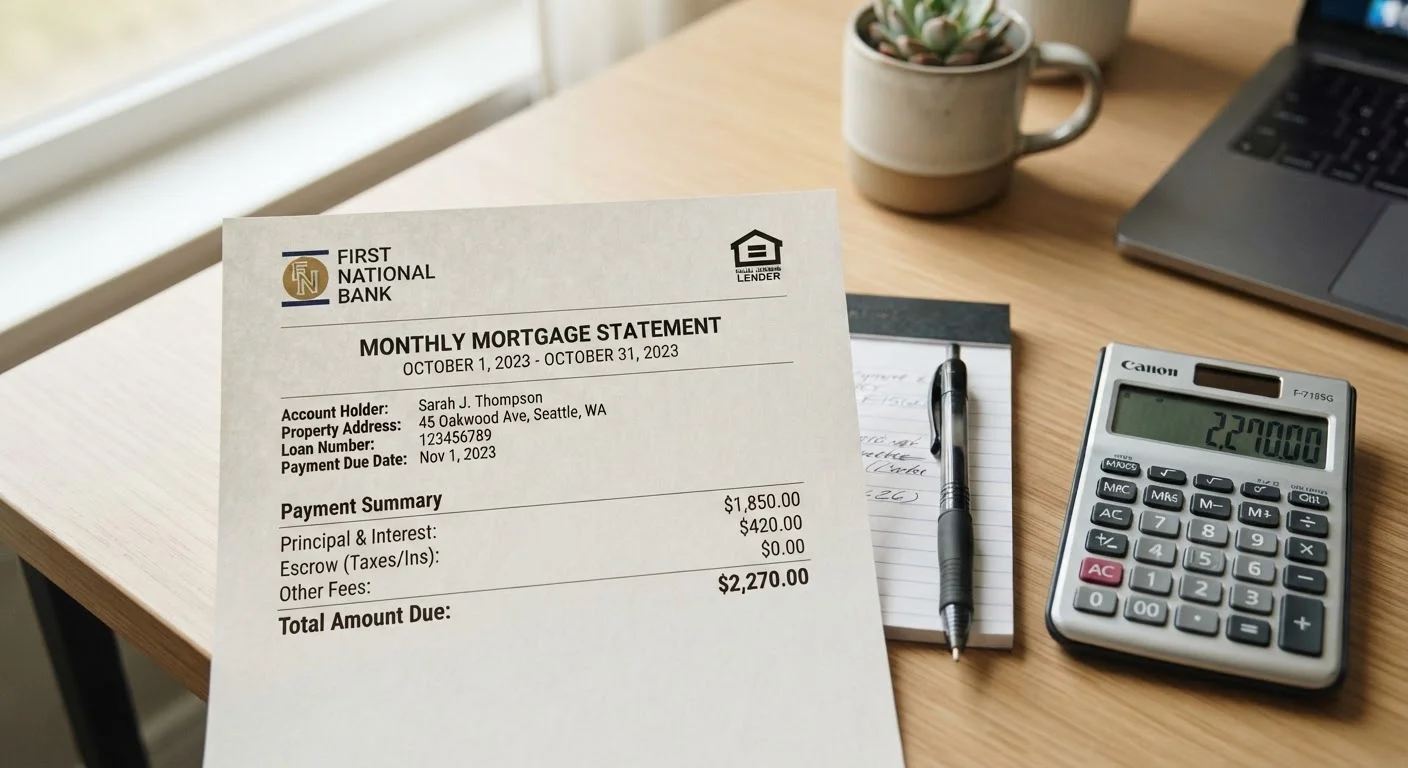
Your mortgage statement arrives every month, and most homeowners glance at the payment amount before setting it aside. That's understandable - but the statement is a dense record of your loan's health, payment history, and how your money is being applied. Learning to read it field by field can help you catch errors, understand your equity progress, and plan ahead.
Statements vary slightly by lender and loan servicer, but federal rules require most servicers to include a standardized set of fields. Here's what each one means.
| Key mortgage statement sections | Payment breakdown, account summary, transaction history, escrow balance |
| Federal statement requirement | Most servicers must send periodic statements under Reg Z / TILA rules (Consumer Financial Protection Bureau) |
| Typical grace period for payments | 10-15 days after the due date before late fees apply |
| PMI removal threshold | Generally 20% home equity (80% loan-to-value ratio) (Homeowners Protection Act (HPA)) |
| Annual interest summary form | Form 1098 issued by your servicer after each calendar year (IRS) |
The Core Payment Breakdown
Principal: The portion of your payment reducing your actual loan balance. In the early years of a 30-year mortgage, this number is surprisingly small due to how amortization works - interest is front-loaded by design.
Interest: The cost of borrowing, calculated each month against your remaining principal balance. As the balance falls, so does the interest portion - and the principal share grows. This shift is gradual but meaningful over time.
Escrow: Many lenders collect monthly amounts toward your property taxes and homeowner's insurance through an escrow account, paying those bills on your behalf when they're due. If you see this line, your statement may show the current escrow balance separately. For a full explanation of why servicers use this system, see how escrow accounts work.
PMI (Private Mortgage Insurance): If your down payment was less than 20% of the home's purchase price, you likely carry PMI. This protects the lender - not you - in the event of default. It typically appears as a separate line item and can often be removed once you reach 20% equity.
Amortization
The schedule by which a loan is repaid through regular payments over time. Early payments are weighted heavily toward interest; later payments shift toward principal.
Principal
The original amount borrowed, or the remaining balance still owed on that amount. Paying down principal builds home equity.
Escrow
A lender-managed account that collects a portion of your monthly payment to cover property taxes and homeowner's insurance when they come due.
PMI (Private Mortgage Insurance)
Insurance required by lenders when a borrower's down payment is less than 20%. It protects the lender against default risk and is typically an added monthly cost.
Loan Servicer
The company that manages your mortgage account - collecting payments, managing escrow, and handling customer service - which may differ from your original lender.
Outstanding Principal Balance
The remaining amount owed on the loan's principal, not including accrued interest or fees. This figure decreases with each principal payment made.
Loan Balance and Account Summary Fields
Outstanding Principal Balance: Your current loan balance - what you would need to pay off to own the home free and clear. Note that this figure does not include accrued interest, fees, or escrow shortfalls.
Payment Due Date and Amount: The exact date your payment must be received (not postmarked) and the total minimum amount due. Servicers typically allow a grace period of 10-15 days, but late fees and credit impacts begin after that window.
Past Payments Applied: A running record of how recent payments were distributed across principal, interest, escrow, and fees. If a payment wasn't applied as you expected, this section is where to look first.
Deferred Balance or Outstanding Fees: Any unpaid fees, missed payments, or deferred amounts from forbearance agreements appear here. An unexpected balance in this field warrants a call to your servicer.
Your mortgage payment history also factors into your overall credit picture. If you want to see how lenders view that data, our guide to reading your credit report section by section walks through exactly what they see.
Fields That Often Catch Homeowners Off Guard
Interest Rate (Adjustable-Rate Mortgages): If you have an ARM, your statement will show the current rate and, often, the next adjustment date. Track this closely - rate changes directly affect your payment amount and total interest paid.
Prepayment Information: Some statements show how additional principal payments would affect your payoff timeline. Even modest extra payments applied directly to principal can meaningfully shorten the life of a loan.
Year-to-Date Totals: These columns show cumulative principal paid, interest paid, and taxes/insurance disbursed for the calendar year. They're useful for tax preparation - mortgage interest is potentially deductible, and your servicer will issue a Form 1098 summarizing annual interest paid.
It's worth remembering that the mortgage payment itself is just one layer of homeownership costs. For a broader picture of what monthly ownership actually requires, see the financial realities beyond the mortgage payment.
This article is for general informational purposes only and does not constitute financial, tax, or legal advice. Consult a qualified financial professional for guidance specific to your situation.
The content on this site is provided for informational purposes only and should not be considered a substitute for professional advice. While we strive to provide accurate and up-to-date information, we make no guarantees regarding its completeness or accuracy. Always consult a qualified professional for advice specific to your circumstances before making any decisions.