

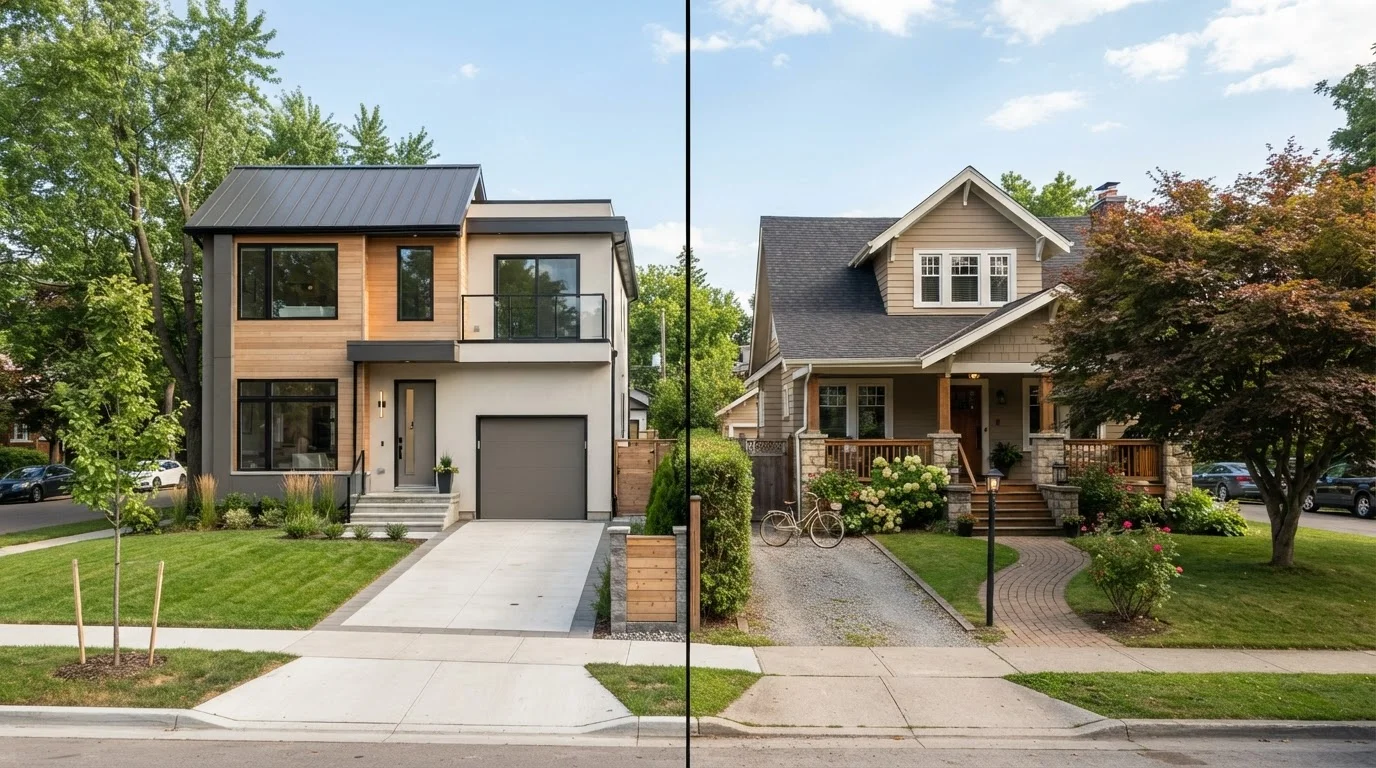
Option A
New Construction
The customizable, warranty-backed option with longer timelines.
Best for: Buyers who want modern features, energy efficiency, and can tolerate a flexible closing timeline.
Option B
Existing Homes
The established, inventory-rich choice with faster closings.
Best for: Buyers seeking established neighborhoods, mature landscaping, and a more predictable purchase process.
How the Purchase Process Differs
Buying a newly built home and purchasing an existing one are fundamentally different transactions, even though both end with a deed transfer. Understanding those differences before you start shopping can save you significant stress-and money.
With an existing home, you're typically working with a seller who's represented by their own agent, negotiating on price and contingencies through established real estate protocols. The timeline is relatively predictable: offer, inspection, financing approval, closing-usually completed within 30 to 60 days of an accepted offer.
New construction works differently. Depending on the stage of the build, you may be purchasing a home that doesn't exist yet. You'll sign a builder's contract-often a lengthy, builder-friendly document-and work directly with the builder's sales team. Your independent buyer's agent can still represent you, but the negotiating dynamics shift considerably. If you're new to the homebuying journey, this guide for first-time buyers covers foundational concepts that apply regardless of which path you choose.
| Criterion | New Construction | Existing Homes |
|---|---|---|
| Closing Timeline | Months to over a year | Typically 30-60 days |
| Price Negotiability | Limited; incentives instead | Generally negotiable |
| Contract Type | Builder's contract (builder-drafted) | Standard purchase agreement |
| Customization | Yes, within builder options | Only via post-purchase renovation |
| Warranty Coverage | Structural & systems warranties | None (unless negotiated) |
| Inspection Timing | Phase-based during construction | After offer acceptance |
| Neighborhood Character | Developing; evolving amenities | Established; known community |
| Energy Efficiency | Meets current building codes | Varies by age and upgrades |
Negotiation, Contracts, and Builder Incentives
In a resale transaction, nearly everything is negotiable: price, closing costs, repairs after inspection, appliances, and move-in date. Sellers are often motivated individuals whose bottom line is influenced by market conditions, time pressure, and competing offers.
Builder contracts are a different animal. Builders rarely discount the base price, especially in active developments. Instead, they may offer incentives-upgraded appliances, closing cost assistance, or design center credits-particularly if inventory is sitting. These incentives can be valuable, but they sometimes come with a requirement to use the builder's preferred lender, which may or may not offer competitive rates. Comparing that lender's loan estimate to offers from independent lenders is essential.
Builder contracts also tend to contain terms that favor the builder, including limited liability for construction delays and clauses that allow them to change certain specifications. Having a real estate attorney review any new construction contract before signing is worth considering. For a deeper look at what questions to raise at each stage, see the questions buyers often overlook.
~13%
Share of US home sales that are new construction
New single-family home sales represent roughly 10-15% of total US home sales in most recent market years, according to US Census Bureau data.
6-18 months
Typical new construction build timeline
According to the US Census Bureau, the average time from permit to completion for a single-family home generally falls within this range, varying by region and complexity.
1 year
Minimum workmanship warranty on most new builds
Most builders offer at least a one-year workmanship warranty by industry convention; structural warranties commonly extend to ten years.
Inspections, Warranties, and Risk
Home inspections work differently across the two transaction types. With an existing home, you hire an independent inspector after an offer is accepted. Their findings become a negotiation lever-you can request repairs, credits, or price reductions. Older homes may reveal deferred maintenance, aging systems, or code issues that weren't visible during showings.
New construction doesn't mean defect-free. Construction quality varies by builder, and newly built homes can have their own issues: improper grading, HVAC miscalibration, or unfinished punch-list items. Hiring an independent inspector-not just relying on the builder's own inspections-is strongly advisable. Many buyers schedule inspections at multiple build phases: foundation, framing, and pre-closing.
The upside of new construction is warranty coverage. Builders typically offer structural warranties (often 10 years), systems warranties (2 years for mechanical, electrical, and plumbing), and workmanship warranties (1 year). Resale homes have no such warranties, though sellers may purchase a home warranty as part of the deal. Once you've closed, ownership responsibilities begin immediately-the first year of homeownership often brings surprises that buyers on both paths benefit from anticipating.
This article is for general informational purposes only and does not constitute legal, financial, or real estate advice. Consult a licensed real estate professional, attorney, or financial adviser for guidance specific to your situation.
The content on this site is provided for informational purposes only and should not be considered a substitute for professional advice. While we strive to provide accurate and up-to-date information, we make no guarantees regarding its completeness or accuracy. Always consult a qualified professional for advice specific to your circumstances before making any decisions.