

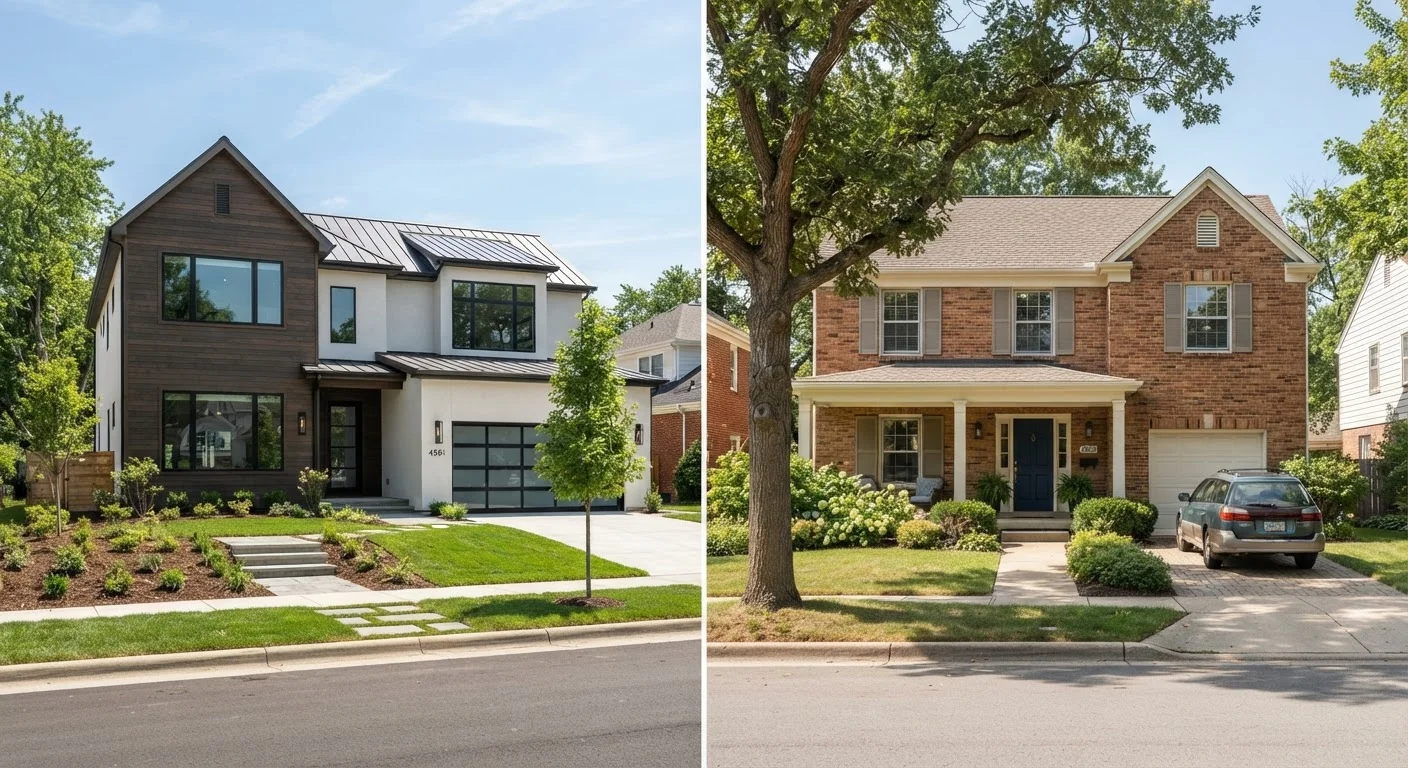
Our Verdict
Neither new construction nor an existing home is universally the better choice - the right decision depends on your priorities, timeline, budget, and risk tolerance. New builds suit buyers who value modern features, warranties, and the ability to customize, while existing homes appeal to those who need to move quickly, prefer established communities, or want more negotiating leverage on price.
| Best for | Recommended |
|---|---|
| Buyers who want modern layouts, energy efficiency, and warranty coverage | New Construction |
| Buyers with tighter timelines or who prefer an established neighborhood | Existing Home |
| Buyers seeking more room to negotiate purchase price | Existing Home |
| Buyers who want to select finishes and customize floor plans | New Construction |
What Separates These Two Paths
When you're shopping for a home, the most fundamental fork in the road is whether to purchase a newly built property or one that has been previously owned. On the surface, both options result in a deed in your name - but the process of getting there, the costs involved, and what you're actually buying can differ considerably.
New construction refers to homes built after the buyer enters a contract, as well as spec homes (builder-built without a specific buyer in mind) and new developments that haven't yet been occupied. Existing homes - sometimes called resale homes - are properties that have had at least one prior owner.
If you're approaching this decision as a first-time buyer, understanding the full homebuying journey is a useful foundation before weighing these specific options.
| New Construction | Existing Home | |
|---|---|---|
| Typical Price | Higher upfront cost | Often lower purchase price |
| Time to Move-In | Months to over a year | 30-60 days after offer accepted |
| Customization | High, especially early in build | Limited without post-purchase renovation |
| Maintenance (Year 1) | Generally low; systems are new | Varies; may need immediate repairs |
| Warranty Coverage | Builder warranties included | Typically none; optional home warranty |
| Negotiation Flexibility | Limited on price; upgrade incentives common | Broader; price, repairs, concessions negotiable |
| Neighborhood Maturity | Often still developing | Established community and infrastructure |
| Contract Complexity | Builder contract; legal review essential | Standard purchase agreement; still review carefully |
Costs, Pricing, and What You're Really Paying For
New construction homes generally carry a higher purchase price than comparable existing homes in the same market. Builders price in current material and labor costs, profit margins, and often a premium for being the first occupant. However, buyers may spend less in the early years on maintenance since systems, appliances, and structural elements are brand new.
Existing homes may be listed at lower prices, but buyers should factor in the potential for deferred maintenance, outdated systems, or necessary renovations. A thorough inspection - and honest budgeting for what it reveals - is critical. What appears to be a savings on purchase price can narrow considerably once repair costs are accounted for.
Get an Independent Inspection Either Way
Even brand-new homes benefit from a third-party inspection before closing. Builders are not infallible, and construction defects - from improper grading to missing insulation - do occur. Hiring a licensed inspector independent of the builder gives you an unbiased assessment and documented record of the home's condition at move-in.
Financing also diverges between the two. Builders often have preferred lenders and may offer incentives to use them, such as closing cost contributions. These arrangements are worth scrutinizing carefully, as the overall loan terms matter more than upfront credits. For existing homes, standard mortgage financing applies, and buyers generally have more freedom in choosing their lender.
Timelines, Customization, and Negotiation
One of the clearest differences between new and existing homes is the timeline to move-in. Existing homes can close in as little as 30 to 60 days after an accepted offer. New construction timelines vary widely - from several months for a nearly completed spec home to over a year for a fully custom build. Delays due to supply chain issues, labor shortages, or permitting can extend that window further.
Customization is where new construction holds a significant edge. Depending on the stage of construction when you sign, buyers may be able to select flooring, cabinetry, countertops, fixtures, and sometimes even structural configurations. With an existing home, you accept the property largely as it is, though renovations after purchase are always possible.
Negotiation dynamics differ, too. With existing homes, buyers can often negotiate price, contingencies, and seller concessions more fluidly, particularly in a slower market. Builder contracts are typically less flexible on price but may offer upgrade packages or closing cost assistance as leverage points. Importantly, builder contracts are drafted by the builder's legal team - having an independent real estate attorney review them before signing is strongly advisable. The right questions at each stage of the process can help you surface terms you might otherwise overlook.
Risks, Warranties, and Long-Term Considerations
New construction homes generally come with builder warranties covering structural defects, systems (HVAC, plumbing, electrical), and workmanship for defined periods. These provide meaningful protection in the early years of ownership. However, buyers should understand exactly what is and isn't covered, and for how long, before relying on warranty language.
Existing homes carry a different risk profile. Older construction may have aging roofs, outdated electrical panels, older HVAC units, or materials that require attention. A licensed home inspector can identify known issues, but inspections have limits - they reflect conditions visible on the day of the inspection and are not guarantees of future performance.
Community context also matters. Existing homes are typically embedded in established neighborhoods with mature trees, functioning schools, and developed infrastructure. New construction communities - especially large subdivisions under active development - may take years to feel settled, and nearby lots could remain under construction well after you move in.
Once you've made your choice, the first year of ownership in either scenario comes with its own learning curve. What to expect in year one can help you prepare for the realities that often catch new homeowners off guard - regardless of whether the home is brand new or decades old.
This article is for general informational purposes only and does not constitute financial, legal, or real estate advice. Consult a licensed real estate professional, attorney, or financial adviser before making decisions specific to your circumstances.
The content on this site is provided for informational purposes only and should not be considered a substitute for professional advice. While we strive to provide accurate and up-to-date information, we make no guarantees regarding its completeness or accuracy. Always consult a qualified professional for advice specific to your circumstances before making any decisions.