

Our Verdict
Each stretching method has a distinct role backed by research. Dynamic stretching prepares the body for movement, static stretching supports post-exercise recovery and long-term flexibility, and PNF delivers the most substantial flexibility improvements in clinical or supervised settings. Choosing the right type at the right time is more important than picking a single favorite.
| Best for | Recommended |
|---|---|
| Pre-workout warm-up | Dynamic Stretching |
| Post-workout cool-down and long-term flexibility | Static Stretching |
| Maximum flexibility gains under supervision | PNF Stretching |
| Rehabilitation or physical therapy settings | PNF Stretching |
Why Stretching Type Matters
Most people treat stretching as a single, interchangeable activity - hold a stretch, move on. But research consistently shows that different methods produce different physiological effects, and using the wrong type at the wrong time can limit performance or even increase injury risk. As explored in our guide on flexibility vs. mobility, even the outcomes we're aiming for differ depending on context.
The three most studied and widely practiced stretching methods are static stretching, dynamic stretching, and proprioceptive neuromuscular facilitation (PNF). Each operates on different mechanical and neurological principles, making timing and application critical to getting results.
| Static Stretching | Dynamic Stretching | PNF Stretching | |
|---|---|---|---|
| Best timing | Post-workout or rest days | Pre-workout warm-up | Dedicated flexibility sessions |
| Flexibility gains | Moderate over time | Minimal (not primary goal) | Greatest of the three |
| Performance impact (pre-exercise) | Can reduce strength output | Neutral to positive | Not typically pre-exercise use |
| Supervision required | No | No | Recommended or required |
| Injury risk if misapplied | Low | Low to moderate | Moderate if unsupervised |
| Accessibility | High - solo, no equipment | High - solo, no equipment | Low - needs partner or therapist |
Static Stretching: The Classic Hold
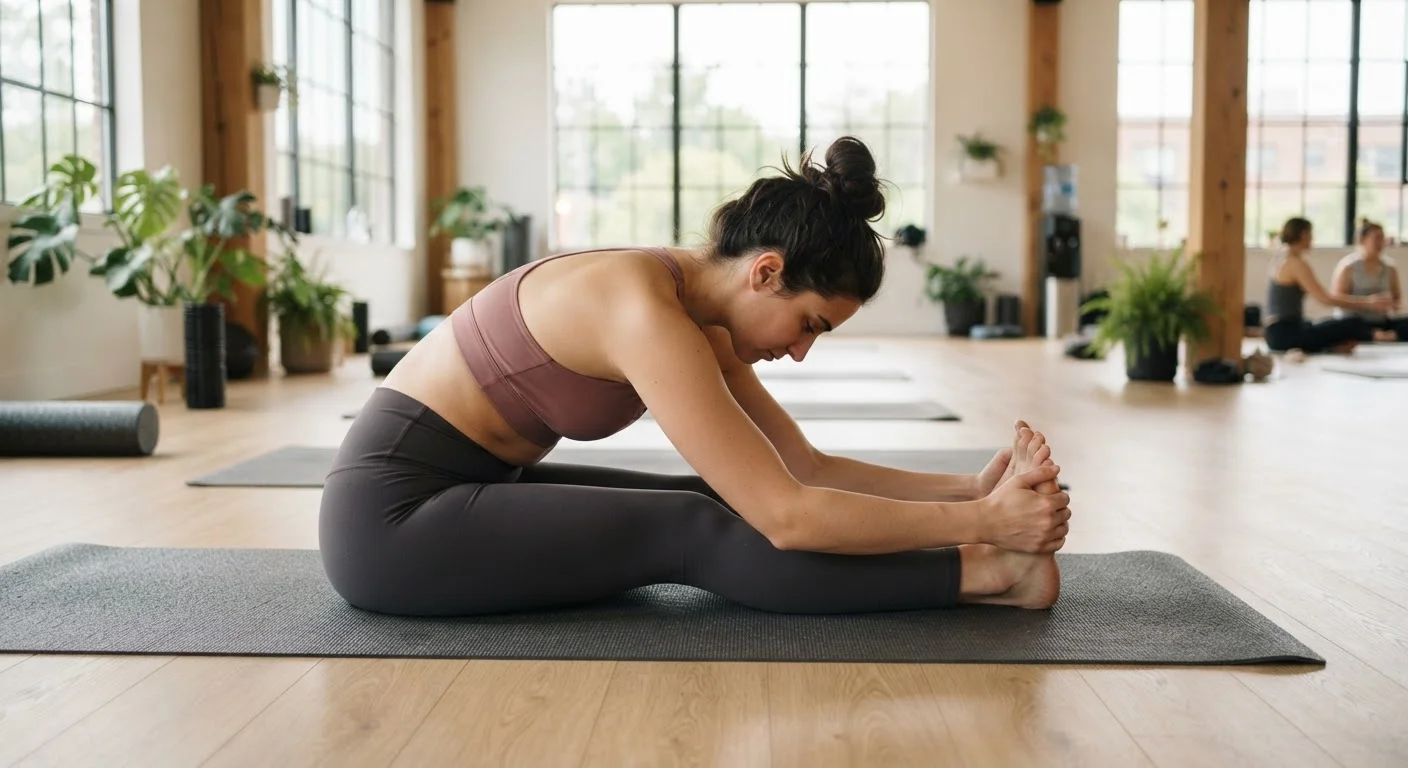
Static stretching involves moving a muscle to the end of its comfortable range and holding that position - typically for 15 to 60 seconds. It's the most familiar form and has been used in fitness and rehabilitation for decades.
When research supports it: Static stretching after exercise or as a standalone flexibility session is well-supported. A review published in the Scandinavian Journal of Medicine & Science in Sports found that regular static stretching durably increases range of motion over time. However, performing static stretches immediately before strength or power activities has been associated with temporary reductions in muscle force output - an effect commonly called stretch-induced strength loss.
Best use case: Post-workout cool-downs, evening flexibility routines, and recovery days. It's accessible, requires no equipment, and is appropriate for most fitness levels.
Dynamic Stretching: Movement-Based Preparation
Dynamic stretching uses controlled, repetitive movements - leg swings, arm circles, hip rotations - to take joints through their range of motion without holding any position. It elevates muscle temperature, increases blood flow, and activates the neuromuscular system.
When research supports it: Studies published in journals including the Journal of Strength and Conditioning Research consistently show that dynamic warm-ups preserve or enhance subsequent athletic performance compared to static stretching. The movement patterns can also be tailored to mirror the activity ahead - for example, hip hinges before deadlifts or lateral shuffles before court sports.
Best use case: Pre-exercise warm-up for virtually any physical activity. It's widely recommended by sports medicine organizations as the preferred warm-up modality. As our article on common exercise myths notes, static pre-workout stretching is one of the fitness beliefs that hasn't held up to scrutiny.
Match Your Stretch to Your Activity
A practical rule: move before you exercise, hold after you exercise. Before a run or sport session, spend several minutes doing leg swings, hip circles, and walking lunges. After cooling down, shift to static holds for the hip flexors, hamstrings, and calves. This sequence aligns with what the research supports and avoids the performance drawbacks of misapplied static stretching.
PNF Stretching: Advanced Flexibility Training
Proprioceptive neuromuscular facilitation (PNF) combines passive stretching with isometric muscle contractions. A common sequence involves stretching a muscle to its limit, contracting it against resistance for several seconds, relaxing, then stretching further. This cycle exploits the body's own neurological reflexes - specifically autogenic inhibition - to allow deeper muscle relaxation and greater range of motion gains.
When research supports it: PNF consistently outperforms both static and dynamic methods for acute and long-term flexibility improvements in research settings. A meta-analysis in the British Journal of Sports Medicine confirmed superior range-of-motion gains with PNF compared to static techniques. However, it requires either a trained partner or a physical therapist and carries a higher risk of muscle soreness when performed incorrectly.
Best use case: Supervised rehabilitation, physical therapy, or structured flexibility programs where significant range-of-motion gains are the primary goal. It is generally not recommended for unsupervised beginners.
For a broader look at how stretching fits alongside other movement concepts, see our overview of flexibility, mobility, and stretching.
Practical Guidance for Everyday Use
A simple, evidence-informed framework for structuring stretching looks like this:
- Before exercise: Use 5-10 minutes of dynamic stretching specific to your planned activity.
- After exercise: Transition to static stretches targeting the muscles you worked, holding each position comfortably.
- For targeted flexibility goals: Incorporate PNF under the guidance of a qualified fitness or healthcare professional.
Consistency matters more than intensity. Stretching a few times per week over months produces durable flexibility improvements; occasional deep sessions do not.
This article is for general informational and educational purposes only. It is not a substitute for professional medical or physical therapy advice. If you have an existing injury, chronic condition, or are returning from surgery, consult a qualified healthcare provider before beginning any new stretching or exercise program.
The content on this site is provided for informational purposes only and should not be considered a substitute for professional advice. While we strive to provide accurate and up-to-date information, we make no guarantees regarding its completeness or accuracy. Always consult a qualified professional for advice specific to your circumstances before making any decisions.