

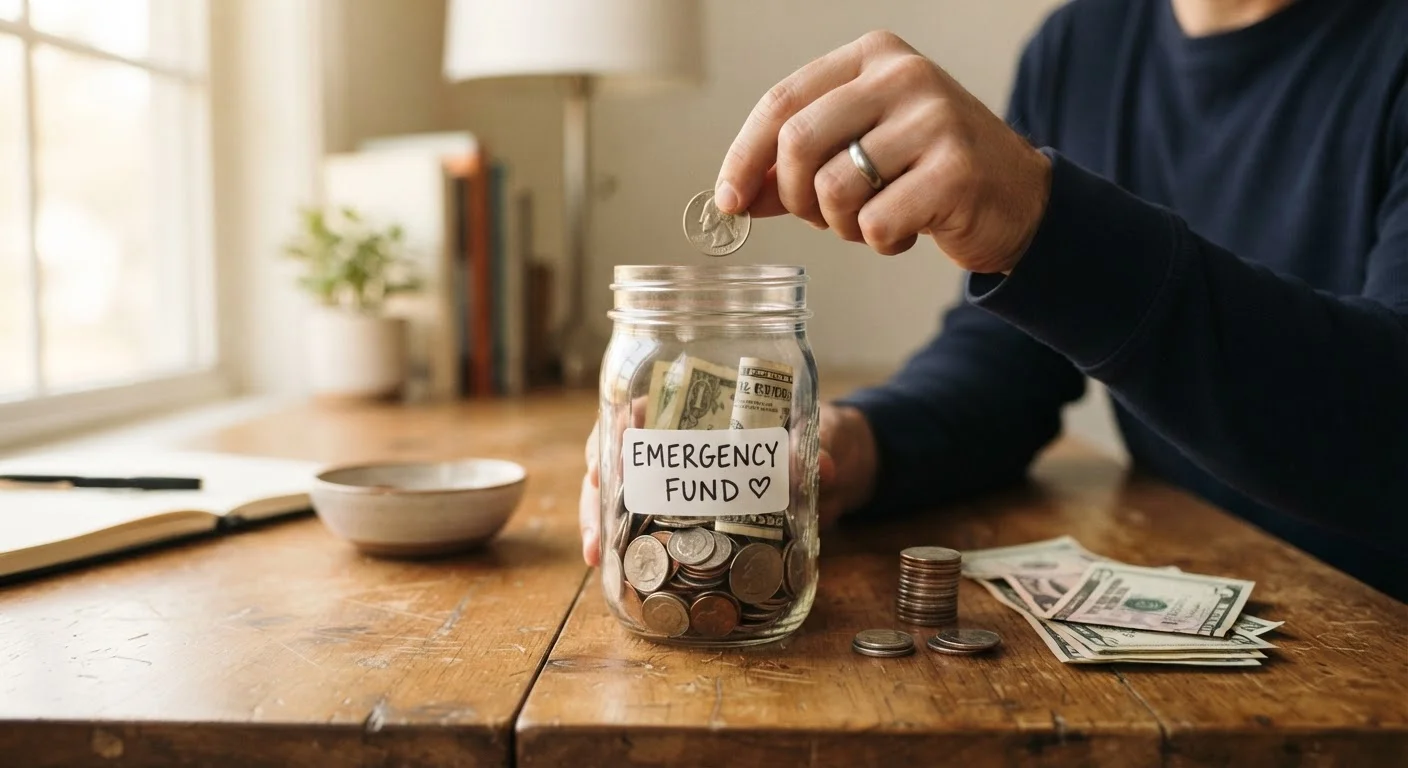
Why Rebuilding Quickly Matters More Than You Think
Using an emergency fund for its intended purpose - a job loss, a medical bill, a major car repair - is not a financial failure. It's the fund doing exactly what it was built to do. The risk is what comes next: operating without a safety net, even temporarily, leaves you one unexpected expense away from turning to high-interest debt.
Research in behavioral economics consistently shows that people who lack liquid savings are more likely to carry credit card balances and less likely to absorb financial shocks without lasting damage to their broader financial plan. Rebuilding promptly closes that vulnerability window.
Before you begin, it's worth checking whether your fund was truly adequate to begin with. If you're unsure, see our assessment guide on whether your emergency fund is actually ready - it covers fund size, account accessibility, and coverage gaps that many people overlook.
What you will need
What You'll Need Before You Start
Rebuilding an emergency fund isn't complicated, but it does require a few things to be in place before the steps below will be effective. Gather the following before you begin:
Budget tracking spreadsheet or app
Helps you identify spending categories where money can be redirected toward emergency fund contributions.
High-yield savings account
Keeps your emergency fund accessible while earning more interest than a standard savings account.
Automatic transfer feature (through your bank)
Schedules recurring deposits so rebuilding happens consistently without manual intervention.
Set a Milestone, Not Just a Final Goal
Breaking your target into smaller milestones - such as the first $500, then $1,000, then one month of expenses - keeps motivation high and progress visible. Celebrating intermediate benchmarks makes a large savings goal feel far less daunting over time.
Step-by-Step: Restoring Your Emergency Fund
Follow these steps in order. The early steps are about creating clarity; the later steps are about building and maintaining momentum. Most people find that once the automation is in place (Step 4), progress becomes largely hands-off.
Calculate Your Exact Shortfall
Before you can rebuild, you need a precise number to work toward. Check your emergency fund balance and compare it to your target - typically three to six months of essential living expenses (housing, utilities, food, insurance, minimum debt payments). Subtract what remains from what you need. That gap is your working target.
If you haven't formally calculated your target before, total your non-negotiable monthly expenses and multiply by the number of months that feels appropriate for your situation and job stability.
Audit Your Current Monthly Budget
Pull up your last two to three months of bank and credit card statements. Categorize every expense as either essential (must-pay) or discretionary (could reduce). Look specifically for subscriptions, dining out, entertainment, and impulse purchases. Even modest reductions across several categories can free up meaningful cash each month.
The goal isn't to live uncomfortably - it's to find a realistic temporary surplus you can redirect. Most households can surface $100-$300 per month without significant lifestyle disruption.
Set a Monthly Contribution Amount
Using the surplus you identified, commit to a fixed monthly contribution to the emergency fund. This amount should stretch you slightly without creating financial strain. If your shortfall is $6,000 and you can save $400 per month, you're looking at roughly 15 months to restore the fund - a reasonable timeline for most situations.
Factor in your other financial priorities. Completely pausing retirement contributions to rebuild an emergency fund faster may not be the right trade-off for everyone. Aim for balance: protect your long-term financial health while steadily closing the gap.
Automate the Transfer
Set up an automatic transfer from your checking account to your dedicated emergency savings account on the day - or the day after - your paycheck arrives. Automating the deposit ensures the money is set aside before you have a chance to spend it elsewhere. This "pay yourself first" approach is one of the most consistently effective savings habits in personal finance.
Choose a transfer date that aligns with your pay schedule so you don't risk overdrafting.
Accelerate With Windfalls and Found Money
Any time you receive unexpected or irregular income - a tax refund, a work bonus, a cash gift, proceeds from selling unused items - direct a meaningful portion directly into the emergency fund. Even depositing 50 to 75 percent of a windfall while allowing yourself a small reward can compress your rebuild timeline significantly.
Similarly, if you cancel a subscription mid-month and notice extra cash in your checking account, move it to savings before it disappears into everyday spending.
Monitor Progress and Adjust Quarterly
Every three months, review your fund balance against your target and assess whether your contribution amount still makes sense. If your income increased, consider boosting the transfer. If you faced another unexpected expense, recalculate the shortfall and reset your timeline without guilt. Life is not linear, and neither is savings recovery.
Use this quarterly check to also confirm that your target amount still reflects your actual monthly expenses - costs shift over time, and your safety net should keep pace.
Don't Neglect High-Interest Debt While Rebuilding
If you're carrying high-interest credit card balances alongside a depleted emergency fund, consider splitting extra cash between debt paydown and savings rather than ignoring one entirely. Leaving high-interest debt untouched while rebuilding savings can cost more in interest than the security the fund provides. A small initial emergency cushion of $1,000 can protect you while you address debt, then you can shift focus back to a fuller fund. Consult a certified financial planner if you're unsure how to prioritize competing obligations.
Common Pitfalls to Avoid During the Rebuild
Even with a solid plan, a few patterns tend to slow or derail rebuilding efforts:
- Setting the target too low: A $1,000 starter fund is a useful first milestone, but it won't cover most serious emergencies. Keep building until you reach three to six months of expenses.
- Treating the fund as flexible savings: The emergency fund should be reserved strictly for genuine emergencies - not vacations, holiday gifts, or opportunistic purchases. Consider keeping it in a separate account from your regular savings to reduce temptation.
- Giving up after a setback: If you have to dip into the fund again mid-rebuild, recalculate and continue. Every dollar contributed before a second setback reduced the damage that setback caused.
Avoid Treating New Credit as a Substitute
It can be tempting to lean on a credit card or personal line of credit while your emergency fund recovers. This approach can work in a genuine pinch, but relying on credit as a permanent safety net adds interest costs and debt risk. Prioritize rebuilding actual savings as quickly as your budget allows.
For a deeper look at practical strategies tailored to rebuilding after a major expense, the companion guide on restoring savings after a large financial hit offers additional approaches worth reviewing.
This article is for general informational and educational purposes only and does not constitute personalized financial advice. Consult a qualified financial professional for guidance specific to your circumstances.
The content on this site is provided for informational purposes only and should not be considered a substitute for professional advice. While we strive to provide accurate and up-to-date information, we make no guarantees regarding its completeness or accuracy. Always consult a qualified professional for advice specific to your circumstances before making any decisions.