

Option A
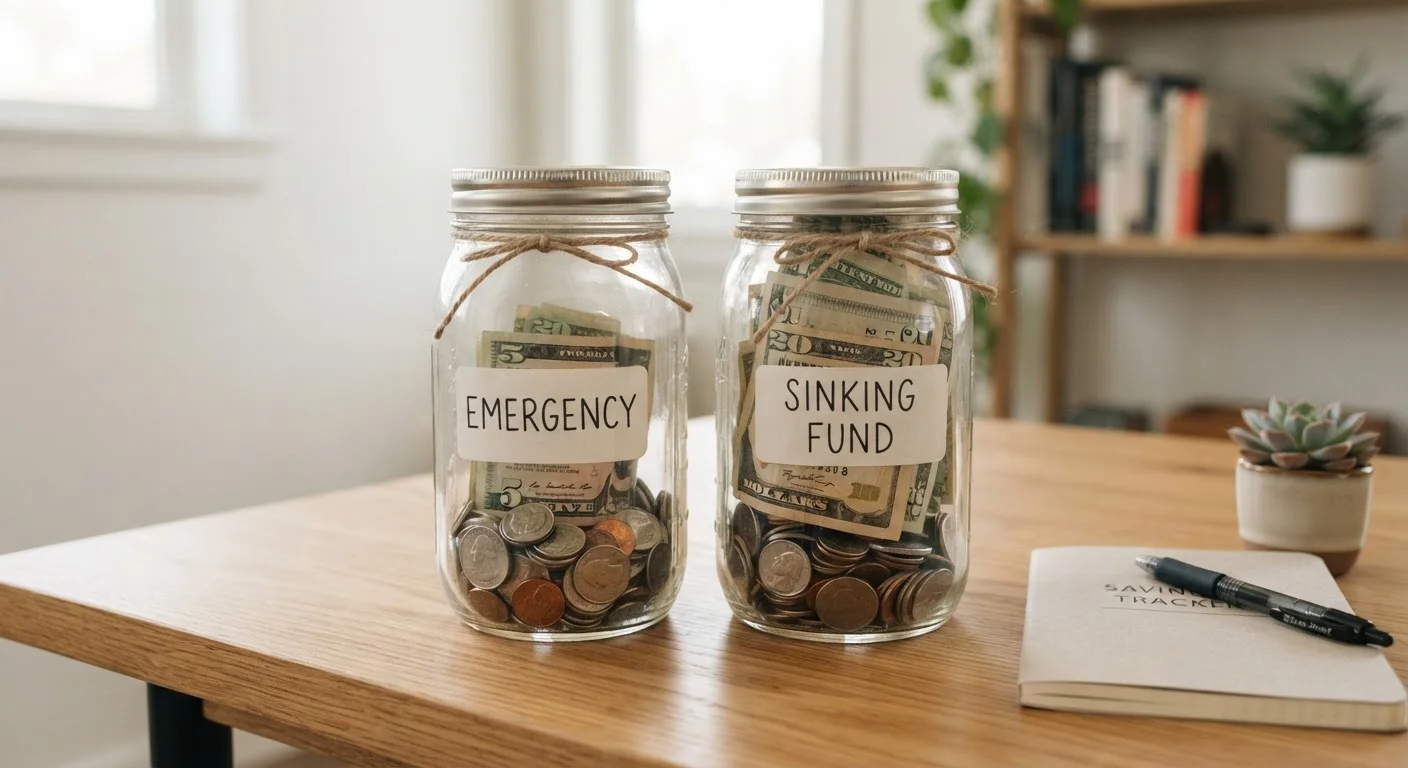
Emergency Fund
The financial safety net for life's true surprises.
Best for: Covering unexpected, unplanned expenses like job loss, medical emergencies, or urgent home repairs.
Option B
Sinking Fund
The deliberate savings tool for predictable future costs.
Best for: Setting aside money in advance for known or anticipated expenses such as car registration, vacations, or appliance replacement.
Why the Distinction Matters
Both an emergency fund and a sinking fund involve setting money aside - but conflating the two can leave you financially exposed. When you raid your emergency savings to pay for a planned vacation, you're left unprotected the next time something genuinely unexpected strikes. Understanding what each fund is designed to do is the first step toward using both effectively.
An emergency fund is a dedicated reserve for costs you could not have reasonably predicted: a sudden job loss, an urgent medical bill, or a major car breakdown on the way to work. It exists to keep you solvent during financial shocks without forcing you to take on high-interest debt. Learn more about the precise scope of this tool in our guide on what an emergency fund actually is - and what it isn't.
A sinking fund, by contrast, is built around certainty. You know your car registration is due each year. You know the holidays arrive every December. A sinking fund takes that known future cost and divides it into manageable monthly contributions so the expense never catches you off guard.
| Criterion | Emergency Fund | Sinking Fund |
|---|---|---|
| Purpose | Covers unpredictable financial shocks | Prepares for known future expenses |
| Expense type | Unplanned and irregular | Planned and anticipated |
| Typical target size | 3-6 months of essential expenses | Exactly the cost of the specific goal |
| Contribution method | Build to target; replenish after use | Divide goal by months remaining |
| Number of funds | Usually one master fund | Often multiple, one per goal |
| When you use it | Crisis or unexpected loss of income | When the anticipated expense arrives |
| Emotional role | Safety net and financial security buffer | Spending plan and stress reducer |
How Each Fund Works in Practice
Emergency funds are generally sized at three to six months of essential living expenses - enough to cover rent or mortgage, utilities, groceries, and minimum debt payments while you recover from a setback. The exact amount depends on factors like job stability, household income sources, and personal risk tolerance. For guidance on where to hold these savings, see our article on where to keep your emergency fund.
Sinking funds work on a simpler formula: estimate the total cost, determine when you'll need it, and divide by the number of months remaining. If new tires will cost roughly $600 and you want to buy them in six months, you contribute $100 per month to that specific sinking fund. Many households run multiple sinking funds simultaneously - one for car maintenance, one for annual insurance premiums, one for holiday spending - each with its own savings target.
~57%
Americans unable to cover a $1,000 emergency
A Bankrate survey found roughly 57% of U.S. adults could not pay an unexpected $1,000 expense from savings alone.
3-6 months
Recommended emergency fund coverage
Most mainstream personal finance guidance suggests holding three to six months of essential living expenses in an accessible emergency fund.
12+
Potential sinking fund categories per household
Common sinking fund targets include car maintenance, home repairs, insurance premiums, holidays, travel, and medical costs - each tracked separately.
The key operational difference is how you replenish each fund. After drawing on an emergency fund, your priority is rebuilding it to its target level as quickly as your budget allows. After using a sinking fund for its intended purpose, you simply restart the contribution cycle for the next anticipated expense. For a deeper look at how sinking funds fit into everyday budgeting, visit our guide on sinking funds as a budgeting tool.
Building Both Without Overextending Yourself
Many people assume they need to fully fund one account before starting the other. In practice, a modest emergency fund - even one or two months of expenses - combined with active sinking fund contributions often provides more practical protection than waiting to reach a larger single target.
A workable starting approach: prioritize getting your emergency fund to at least one month of essential expenses, then begin directing a portion of each paycheck into sinking funds for your most predictable upcoming costs. As income allows, gradually build the emergency fund toward its full target. These strategies connect directly to broader budgeting basics that make every dollar work harder.
Keeping the two funds in separate accounts - even at the same institution - reinforces their different purposes and removes the temptation to borrow from one to cover the other. The goal is clarity: when a real emergency strikes, you should know immediately which account to reach for and feel confident doing so without guilt or confusion.
This article is for general informational and educational purposes only and does not constitute personalized financial advice. Consult a qualified, licensed financial adviser before making decisions about your own savings strategy.
The content on this site is provided for informational purposes only and should not be considered a substitute for professional advice. While we strive to provide accurate and up-to-date information, we make no guarantees regarding its completeness or accuracy. Always consult a qualified professional for advice specific to your circumstances before making any decisions.