

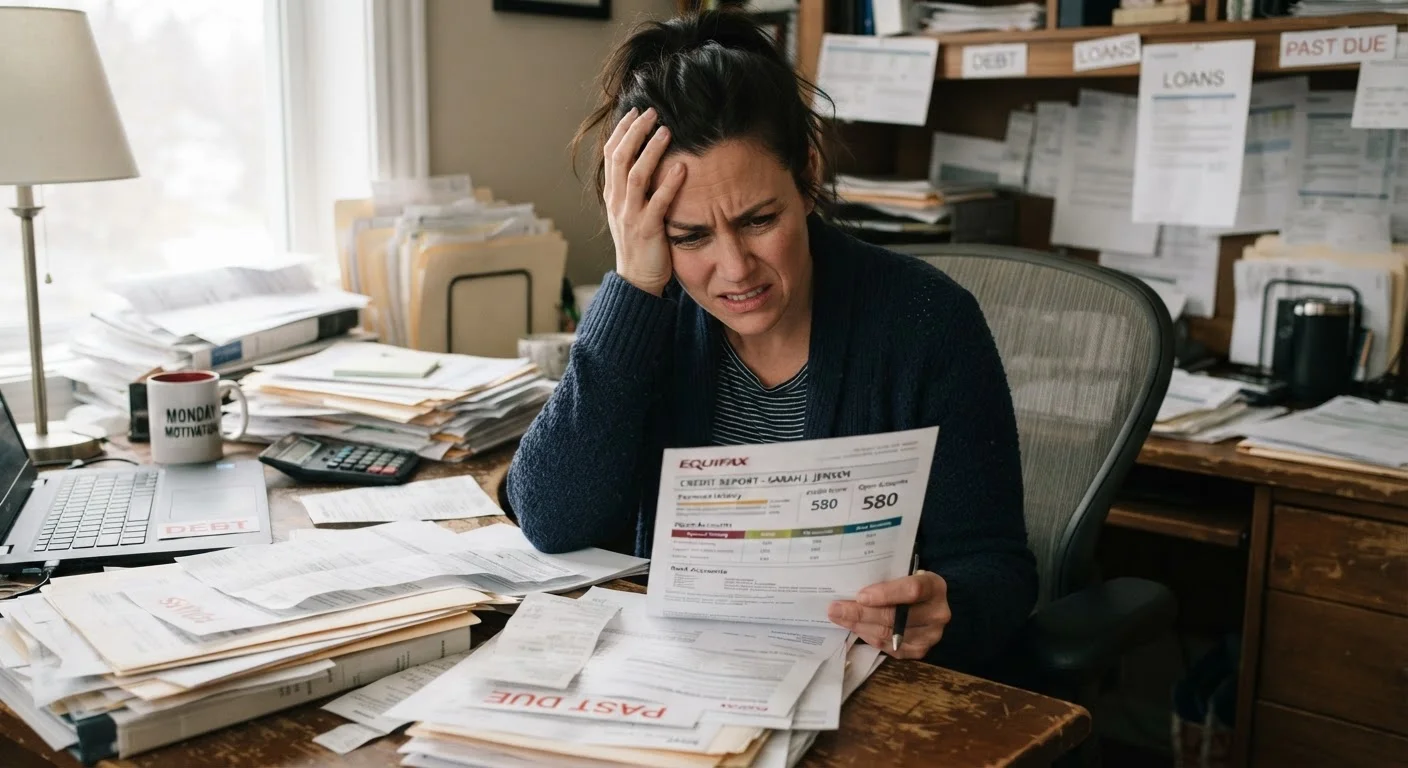
Why Credit Report Disputes Fail More Often Than They Should
A credit report error can cost you a loan approval, a higher interest rate, or even a rental application - so it's worth disputing quickly. What surprises many people is how often the process stalls, not because the error isn't real, but because the dispute itself was filed incorrectly. Before you start, it helps to understand what you're actually reviewing. Our guide to reading your credit report without getting lost walks through each section so you can spot errors before you file.
The dispute system is a formal, regulated process governed by the Fair Credit Reporting Act. It involves at least two parties - you and the bureau - and often a third: the creditor or lender who originally supplied the data. When any piece of that chain is handled sloppily, the investigation closes without a correction. The mistakes below are the most common reasons that happens.
Know Your Rights Under Federal Law
The Fair Credit Reporting Act (FCRA) gives you the right to dispute inaccurate or incomplete information on your credit report at no charge. Credit bureaus are legally required to investigate most disputes within 30 days (45 days if triggered by a full file disclosure). If an investigation is inadequate or a correction is wrongly refused, you have the right to add a 100-word consumer statement to your report and to pursue legal remedies. Understanding these rights before you file puts you in a stronger position throughout the process.
The Mistakes That Derail Credit Disputes - And How to Avoid Them
Each of the following errors is preventable. Understanding why they happen is the first step to making sure your dispute moves through the system effectively.
Filing a dispute without gathering supporting documentation first.
Why it happens: Many consumers assume that simply flagging an error is enough to trigger a correction, not realizing that bureaus rely heavily on what the creditor reports back.
Using vague or emotional language in the dispute letter instead of specific, factual claims.
Why it happens: Dispute templates found online are often generic, and consumers understandably feel frustrated when writing about damaging errors - that frustration can bleed into the language.
Disputing only with the credit bureaus and ignoring the original data furnisher.
Why it happens: Most consumers know to contact Equifax, Experian, or TransUnion, but fewer realize that the bureau simply relays the dispute to the creditor or lender that submitted the data.
Assuming one dispute letter covers all three credit bureaus.
Why it happens: Consumers reasonably expect the three major bureaus to share information, but each bureau maintains its own database and must be contacted separately.
Accepting a 'verified as accurate' outcome without following up or escalating.
Why it happens: A closed investigation feels final. Many people interpret 'verified' as meaning the bureau conducted a thorough review, when in practice it often means the furnisher simply confirmed their own record.
Disputing accurate negative information in the hope it will be removed.
Why it happens: Some credit repair marketing implies that any item can be removed if disputed enough times - this is misleading and can actually flag your file as a bad-faith filer.
1 in 5
Americans with a credit report error
A Federal Trade Commission study found that approximately one in five consumers had an error on at least one of their three major credit bureau reports.
79%
Disputed errors that resulted in changes
According to the same FTC research, the majority of consumers who disputed errors and found them inaccurate saw modifications made to their reports.
30-45 days
Bureau investigation window under FCRA
The Fair Credit Reporting Act requires credit bureaus to complete most dispute investigations within 30 days, extended to 45 days when the dispute arises from a free annual credit report request.
For a clearer picture of the terminology you'll encounter while reviewing your report and filing disputes - terms like charge-off, utilization ratio, or derogatory mark - the credit report terms reference guide is a useful companion. Understanding the language means you'll write more precise dispute letters and interpret bureau responses more accurately.
After You File: What to Monitor and When to Escalate
Once your dispute is submitted, track the timeline carefully. Bureaus are required to notify you of the results in writing. If the outcome is 'verified as accurate' and you believe that's wrong, you are not out of options.
Credit Repair Companies Cannot Do More Than You Can
Some companies charge significant fees to dispute credit report errors on your behalf. Under federal law, everything a credit repair company can legally do, you can do yourself for free. Be cautious of any service that promises to remove accurate negative information or guarantees a specific score increase - these claims are typically deceptive. The CFPB and FTC both warn consumers about predatory credit repair practices.
Document every step: save confirmation numbers, print or screenshot responses, and keep copies of everything you sent. If you are also working to improve your score beyond correcting errors, the checklist in Before You Try to Raise Your Credit Score, Check These Things First helps you prioritize the factors that actually move the needle. And if credit myths have shaped your understanding of how this system works, separating credit myths from documented fact is worth reading alongside this guide.
This article is for general informational purposes only and does not constitute legal, financial, or credit counseling advice. Consult a licensed financial adviser or consumer law attorney for guidance specific to your situation.
The content on this site is provided for informational purposes only and should not be considered a substitute for professional advice. While we strive to provide accurate and up-to-date information, we make no guarantees regarding its completeness or accuracy. Always consult a qualified professional for advice specific to your circumstances before making any decisions.