

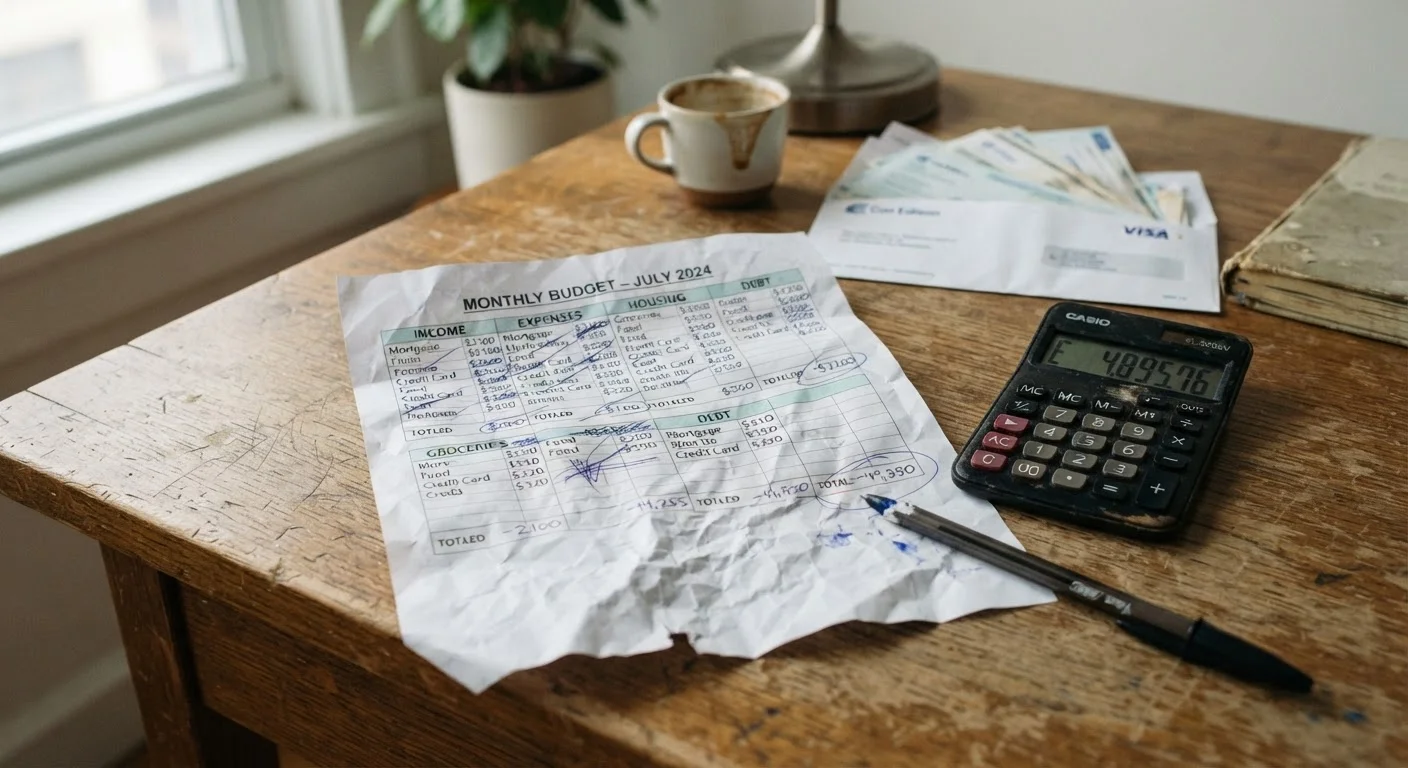
The Pattern Behind Budget Failure
Most people who abandon a budget do so within the first two weeks. The reasons rarely have anything to do with mathematics. Budgets break down because of structural flaws in how they're built and behavioral patterns in how they're followed - or not followed. Understanding those patterns is the first step toward building a plan that lasts beyond month one.
If you're new to tracking spending entirely, the practical starting point guide covers the foundational steps before you worry about avoiding these mistakes. For everyone else, the errors below are where most budgets quietly fall apart.
Using categories that are too broad to be actionable.
Why it happens: "Food" or "miscellaneous" feels simple upfront, but it masks where money actually goes. When a category can absorb almost any purchase, overspending is invisible until it's too late.
Leaving irregular expenses out of the monthly plan entirely.
Why it happens: Car registration, annual subscriptions, dental visits, and holiday gifts don't appear every month, so they're easy to ignore during planning. When they arrive, they blow a hole in the budget.
Setting spending limits far below what you actually spend.
Why it happens: People often set aspirational targets rather than realistic ones. Allocating $150 a month for groceries when you historically spend $350 guarantees failure - and discouragement.
Allowing lifestyle inflation to go unchecked after a raise or windfall.
Why it happens: When income increases, spending tends to rise in proportion - often without conscious decisions. Dining gets more frequent, subscriptions accumulate, and the new normal quietly absorbs the extra income.
Skipping a regular budget check-in after the first week.
Why it happens: Initial enthusiasm drives careful tracking early on, but without a scheduled habit, check-ins become optional - then rare - then nonexistent. Most people only look at the budget again when something has gone wrong.
Building a budget so restrictive it allows no flexibility or enjoyment.
Why it happens: Motivated by a desire for rapid progress, people eliminate all discretionary spending at once. The psychological strain of deprivation leads to all-or-nothing thinking - one "slip" justifies abandoning the plan entirely.
Why Structure and Consistency Are Everything
A budget is not a one-time document - it's an ongoing system. The most common thread running through every budget failure is the absence of a regular review habit. Without scheduled check-ins, small overspending in one category compounds invisibly until the entire plan collapses.
One Missed Week Can Derail the Whole Month
Skipping a budget check-in for even one week allows small overages to stack unnoticed. By the time most people realize they're off track, the damage has spread across multiple categories and the month is already compromised. Treat your weekly review as non-negotiable, not optional.
A weekly review doesn't need to take more than ten minutes. The goal is to catch drift early - before a $40 overage in dining becomes a $200 problem by month's end. The monthly budget reset walkthrough provides a concrete framework for doing exactly this.
It also helps to examine the assumptions underneath your current plan. Many budgets that repeatedly fail aren't just missing discipline - they're missing realistic structure. The principles behind durable budgets explores what separates plans that hold from plans that don't. And if your budget seems structurally broken beyond simple adjustments, these warning signs can help you decide when a full reset is warranted.
This article is for general informational and educational purposes only and does not constitute personalized financial advice. Consider consulting a qualified financial professional for guidance specific to your situation.
The content on this site is provided for informational purposes only and should not be considered a substitute for professional advice. While we strive to provide accurate and up-to-date information, we make no guarantees regarding its completeness or accuracy. Always consult a qualified professional for advice specific to your circumstances before making any decisions.