

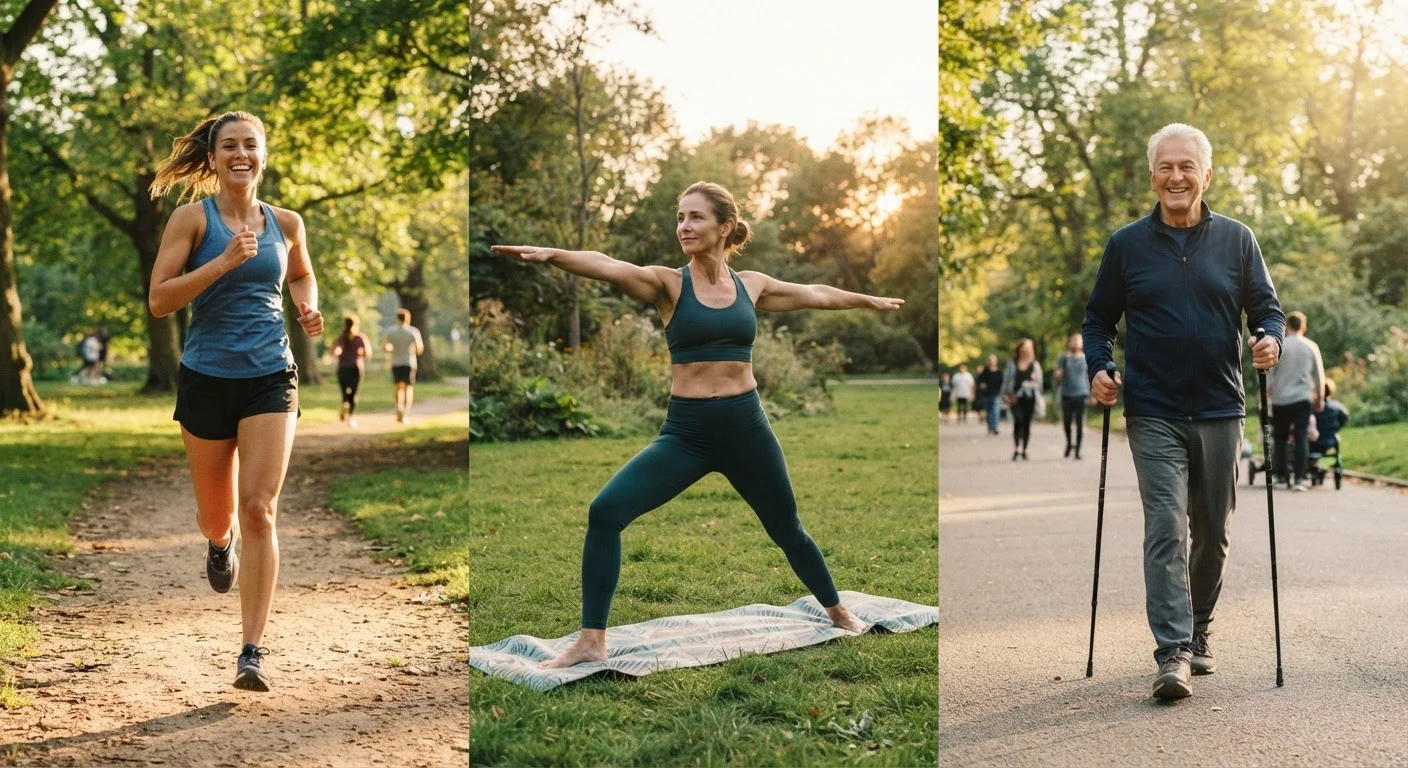
Why Your Fitness Goals Can't Stay the Same Forever
Most people set fitness goals around performance - running a faster mile, lifting heavier, losing weight. But exercise science tells a more nuanced story: what your body needs from movement evolves steadily across your lifespan. Hormonal shifts, changes in muscle mass, bone density fluctuations, and the accumulating demands of daily life all reshape what effective, sustainable fitness looks like at each stage.
This isn't discouraging news. It's freeing. Understanding how your priorities should shift lets you work with your body instead of fighting it - and it dramatically improves your chances of staying active for decades. For a comprehensive foundation, see our end-to-end fitness guide for everyday Americans.
Your 20s and 30s: Build the Foundation
In your twenties and thirties, your body is typically at or near peak physical capacity - muscle recruitment is efficient, recovery is faster, and bone density is still accumulating. This is the ideal window to establish habits that will serve you for life.
That said, this stage carries its own traps. Overtraining, ignoring mobility work, and treating rest as optional are common mistakes that create injuries or burnout. The goal isn't to maximize output right now - it's to build a foundation you can sustain. See our guide on getting back into exercise after a gap if life has already interrupted your momentum.
Your 40s and 50s: Protect What You've Built
Starting around your forties, the body begins losing roughly 3-8% of muscle mass per decade - a process called sarcopenia - and recovery times lengthen noticeably. Hormonal changes, particularly around menopause and andropause, affect energy, body composition, and joint health.
3-8%
Muscle mass lost per decade after age 30
Research published in exercise physiology literature consistently documents this rate of decline, accelerating further after age 60 without resistance training intervention.
2x
Reduced fall risk with regular balance training
Studies cited by public health organizations suggest that targeted balance and strength programs can reduce fall incidence in older adults by roughly half.
The strategic response isn't to do less - it's to do differently. Strength training becomes especially valuable here for preserving lean muscle and supporting bone density. Cardiovascular exercise remains critical for heart health. And recovery - sleep, adequate protein intake, and rest days - earns a bigger role in the plan. This stage also has real mental health dimensions; emotional needs shift across life stages in ways that intersect closely with physical activity habits.
Your 60s and Beyond: Move for Longevity
In older adulthood, the fitness priorities shift again - this time toward maintaining functional independence, reducing fall risk, and sustaining quality of life. Balance training, flexibility work, and lower-impact cardio move from optional extras to central pillars of a sound routine.
High-intensity activity isn't necessarily off the table, but the calculus changes. Joint health, existing conditions, and individual recovery capacity matter more, and exercise selection should reflect that. The stage-by-stage overview of physical activity needs offers helpful context for this phase specifically.
This article provides general health and fitness information for educational purposes only. It is not a substitute for personalized medical advice. Always consult a qualified healthcare professional before beginning or significantly changing an exercise program, especially if you have existing health conditions.
The content on this site is provided for informational purposes only and should not be considered a substitute for professional advice. While we strive to provide accurate and up-to-date information, we make no guarantees regarding its completeness or accuracy. Always consult a qualified professional for advice specific to your circumstances before making any decisions.