

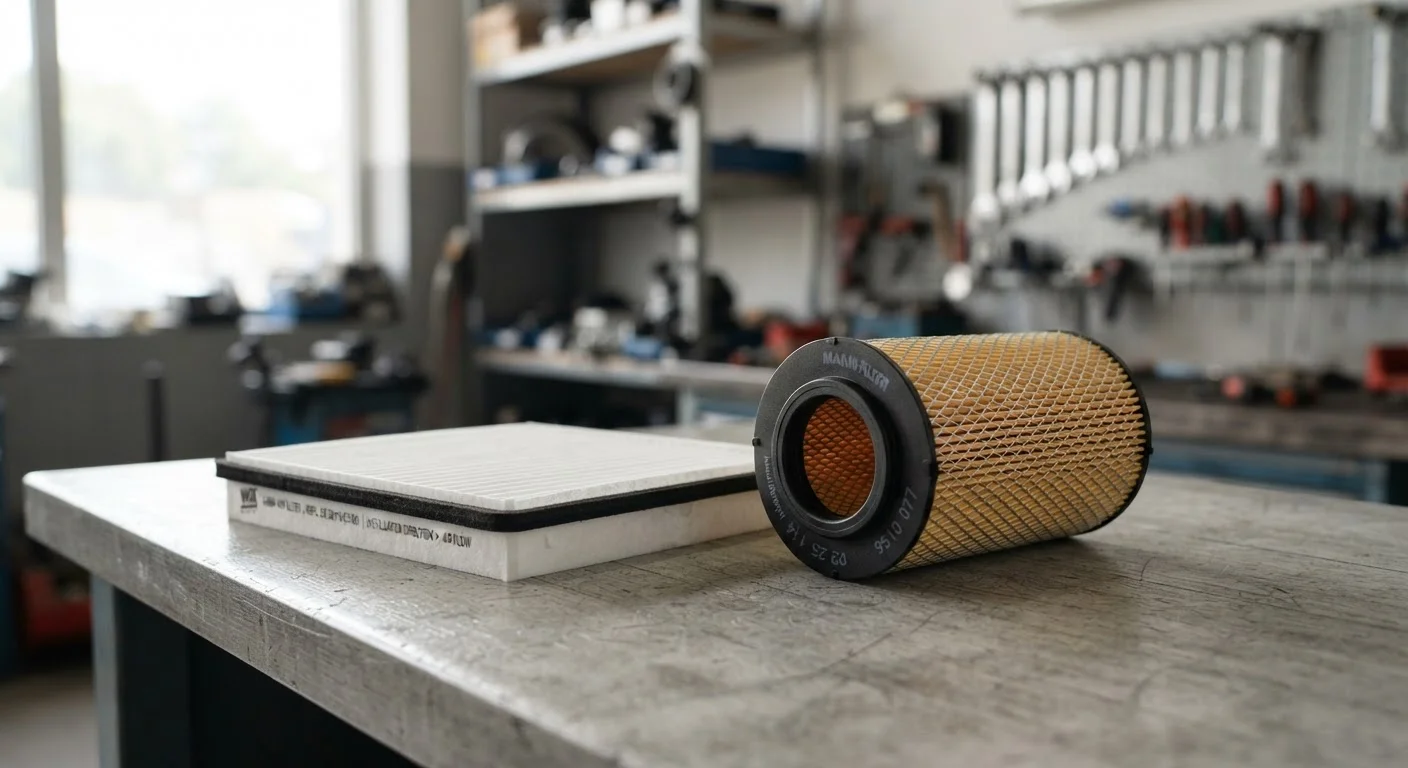
Option A
Cabin Air Filter
The filter that protects what you breathe inside the car.
Best for: Drivers concerned about interior air quality, allergy sufferers, and anyone spending long periods inside their vehicle.
Option B
Engine Air Filter
The filter that protects your engine's performance and longevity.
Best for: Every driver - a clean engine air filter is essential to proper combustion, fuel efficiency, and engine health.
What Each Filter Actually Does
The naming overlap causes genuine confusion, but these two filters have no functional overlap whatsoever. Understanding what each one protects makes their differences immediately clear.
The cabin air filter - sometimes called a pollen filter or HVAC filter - sits in the ventilation system and cleans the air that flows through your car's heating, ventilation, and air conditioning (HVAC) system before it reaches you and your passengers. It captures pollen, dust, mold spores, exhaust particles, and other airborne contaminants. Vehicles with a cabin air filter began appearing widely in the late 1990s, and most modern cars now include one as standard equipment.
The engine air filter sits in the engine bay inside an airbox connected to the intake system. Its job is to remove dirt, dust, insects, and debris from the air before it mixes with fuel in the combustion chamber. Engines require a precise ratio of clean air to fuel to run efficiently, and even small amounts of abrasive particulate can cause wear on internal components over time.
| Criterion | Cabin Air Filter | Engine Air Filter |
|---|---|---|
| What it protects | Passenger air quality | Engine internals |
| Location | Behind glove box or under dash | Engine bay airbox |
| Typical replacement interval | 15,000-25,000 miles | 15,000-30,000 miles |
| Common symptoms when clogged | Weak HVAC airflow, musty odor | Reduced fuel economy, sluggish response |
| Effect on vehicle performance | None - comfort and air quality only | Can affect combustion efficiency |
| Present in all vehicles? | Most vehicles made after ~2000 | Yes, all combustion-engine vehicles |
Location, Replacement Schedule, and Warning Signs
Knowing where each filter lives helps you or your mechanic locate and inspect them quickly.
The cabin air filter is typically accessed behind the glove box, under the dashboard, or under the hood near the base of the windshield - the exact location varies by vehicle make and model. Replacement is generally recommended every 15,000 to 25,000 miles, though manufacturers vary. Signs of a clogged cabin filter include reduced airflow from the vents, musty or stale odors inside the car, and increased HVAC noise as the blower motor works harder.
The engine air filter is found in the engine bay, usually inside a black plastic airbox near the top of the engine. Most manufacturers recommend replacement every 15,000 to 30,000 miles under normal driving conditions. Symptoms of a dirty engine air filter can include a slight drop in fuel economy, reduced throttle response, or in severe cases, a rough idle - though modern vehicles with electronic fuel management are better at compensating, making early symptoms easy to miss.
Check Your Owner's Manual First
Replacement intervals published online are general guidelines. Your vehicle's manufacturer sets specific intervals based on its engine design, intake system, and intended operating conditions. The owner's manual is the authoritative source for your specific vehicle. Some automakers also provide guidance for 'severe duty' conditions - such as frequent dusty or off-road driving - that call for earlier replacement.
Always consult your vehicle's owner's manual for the manufacturer's specific replacement intervals. Driving in dusty environments, on gravel roads, or in areas with heavy air pollution can shorten the useful life of both filters significantly.
Why Confusing the Two Can Lead to Neglect
The most practical consequence of mixing up these filters is that drivers sometimes assume replacing one covers both - it does not. They are separate components, sold separately, and serviced independently. A technician replacing your engine air filter during an oil change is not also replacing your cabin air filter, and vice versa.
Neglecting the cabin filter primarily affects comfort and health - persistent musty smells, worsening allergy symptoms, and foggy windows caused by reduced defrost airflow are common complaints. Neglecting the engine air filter, however, can affect performance and, over a long period of severe restriction, potentially contribute to engine wear.
~15,000 mi
Typical cabin filter replacement interval
The U.S. Department of Energy notes that cabin air filter intervals vary widely by manufacturer and driving environment.
Up to 10%
Potential fuel economy impact from a severely restricted engine air filter
The U.S. Department of Energy has noted that a clogged engine air filter can affect fuel economy on older carbureted vehicles; modern fuel-injected engines compensate better, but performance can still be affected.
Both replacements are among the more accessible maintenance tasks for vehicles - many owners inspect them at home - but if you're ever uncertain about the condition of either filter, a qualified mechanic can check both during a routine service visit.
The content on this site is provided for informational purposes only and should not be considered a substitute for professional advice. While we strive to provide accurate and up-to-date information, we make no guarantees regarding its completeness or accuracy. Always consult a qualified professional for advice specific to your circumstances before making any decisions.